Beekeeping Swarm Trap Tips: 8 Ways to Catch More
It’s simple to set up a beekeeping swarm trap. Many newcomers just hang a box, wait for a month, and end up with nothing but a nest of ants.
The tips listed below are concerned with the small details that determine whether the scout bees go past your box or enter it.

Table of Contents
Beekeeping Swarm Trap Tips
1. Set More Than One Trap
A swarm won’t take the first box it encounters. In controlled experiments, a swarm chose the best of a number of possible nest sites, the scouts conveying their discoveries via waggle dances.
Hence, your trap is always up against other cavities in the area. Each additional trap you hang provides another opportunity to succeed.
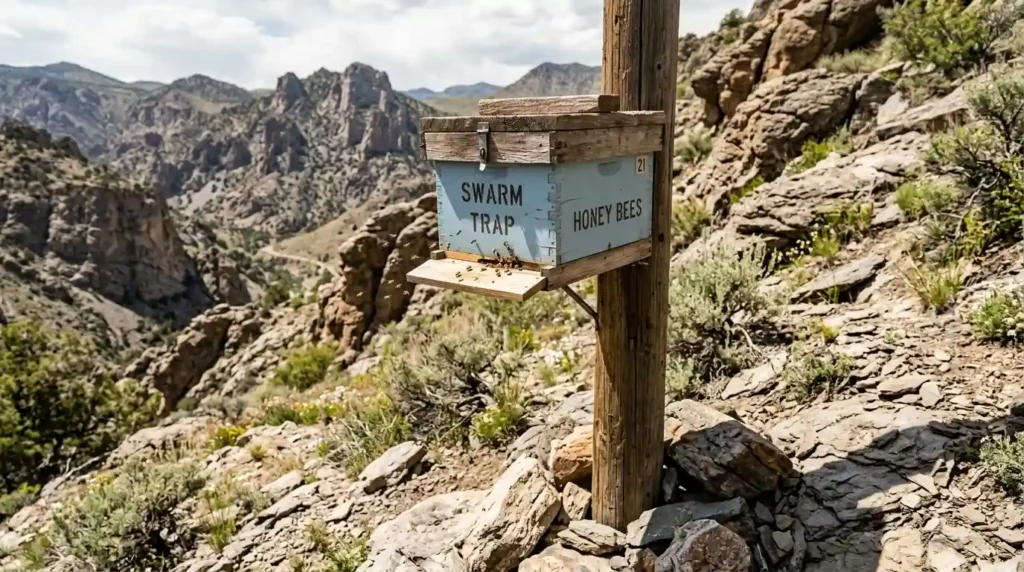
So, it’s a good idea to place two or three of them around your yard and the area surrounding it, provided that you can safely reach all of them.
2. Lure
A strong scent can make a great difference. In a crossover experiment, nineteen swarms moved into artificial nests which contained a slow-release mixture of Nasonov components, whereas only four swarms selected nests with no pheromone.
Studies showed that swarms preferred blends in which nerolic acid was added to citral and geraniol as compared to those containing only the other two substances.
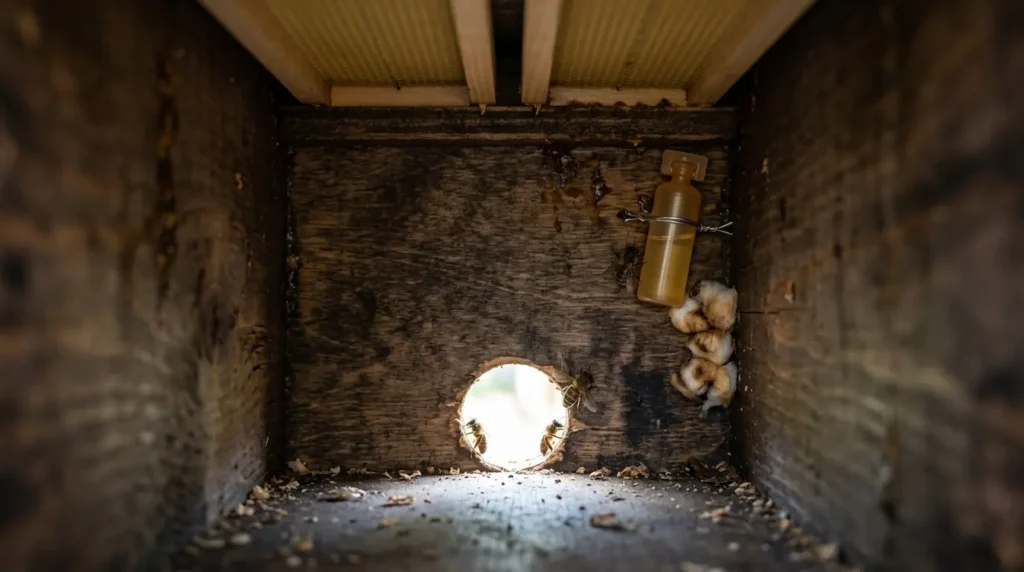
Since lemongrass oil is mainly composed of citral, it is a convenient and cost-effective choice, but it is not a perfect substitute for the genuine article.
Remember that greater amounts do not necessarily mean better results. A few drops or an appropriate slow-release lure are more than enough.
3. Shape of the Box
The shape of the cavity does not seem to be a significant factor in gaining the swarm’s acceptance.
A simple nuc box or a regular hive body is quite sufficient. Instead, use your time on deciding the volume, the size of the entrance, and the location.
4. Swarm-sized Container
It is tempting to believe that a larger swarm should have a larger home, but the data does not support this.
In one study carried out in Arizona that looked at 82 European swarms, no connection was found between the size of the swarm, the date on which it appeared, and the size of the cavity it selected.
Therefore, there is no need to try to work out what size swarm might turn up. Just choose one suitable volume and keep to it.
5. Give The Bees A Head Start
Studies into the process of nest establishment showed that colonies prefer to start building the comb close to the entrance of the cavity rather than high up at the ceiling, as this could reduce the distance they have to travel.
In practice, a frame or two of old comb placed near the opening gives a new colony a head start and causes the box to have the smell of a hive.
6. Bees You’re Likely to Catch
Cavities of about 13.5 litres were most effective for capturing Africanized swarms, as most European swarms would refuse to enter them.
If Africanized bees are common in your area, you should carefully consider what you’re allowing into your garden before hanging a trap and should ask local beekeepers or your extension service for advice.
7. Bee Scouts
The presence of bees in your box doesn’t mean that a swarm has moved in. Some bees that are hovering and exploring the entrance are generally scouts, and they may carry out their inspection for a long time.
A single scout can spend about 40 minutes inspecting a possible nest site. Continuous activity with bees coming back to the box with pollen usually indicates that the colony has established itself.
If all you see are scouts, then leave the trap be and remain patient.
8. Keep Notes
Make a note of the position of each trap, the height at which it hung, the kind of lure you used, and when the bees appeared.
Having gone through one season, you’ll have a record of what works in your area, a record which is more valuable than any general advice.
If a swarm does move in, remember that you don’t know where it came from, so wait until dusk to move it and then check it for mites and disease as early as possible, because a free colony is not free from problems.
Last Few Things to Remember
It is important to check your traps regularly, keep ants and wax moths away from empty boxes, and make safety a top priority when working at height.
It is normal for some traps to remain empty throughout the season. If you continue to use them, a properly placed beekeeping swarm trap can obtain a colony at almost no cost.





3 Comments