Porcini Mushrooms Forage Guide (Advanced Level)
Porcini mushrooms are one of the best things a forager can discover. They have a meaty and nutty flavor and work well in a variety of dishes, such as risotto or simply sautéed in butter and garlic.
They never follow your schedule either, which means it requires patience, some knowledge, and a good deal of walking to locate them. Here is how you can make the most of your time in the woods.
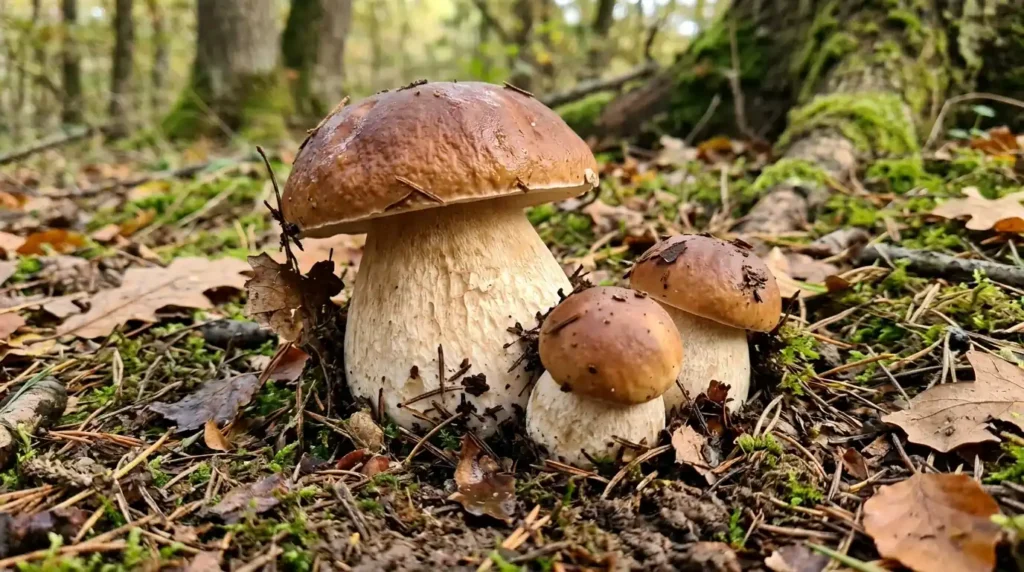
Table of Contents
Know What You’re Looking For
Before placing the mushrooms in the basket, consider what kind you are actually picking; porcini mushrooms (mainly Boletus edulis and its close relatives) have a number of characteristics.
The cap is typically a rounded, bun-shaped brown colour, ranging from light tan to a deep chestnut. If you turn it over, you won’t see any gills.
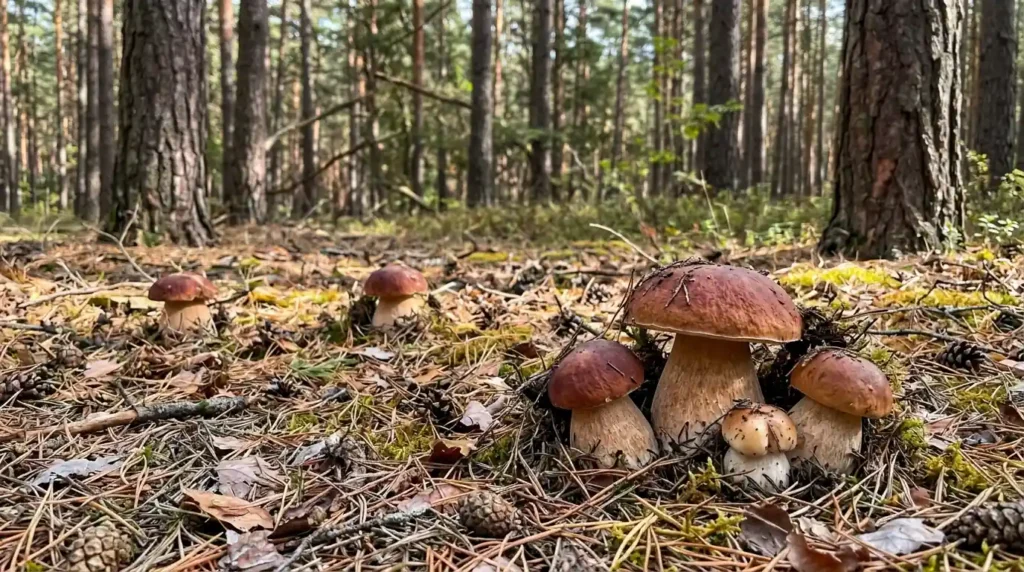
Instead, there is a spongy layer made up of small pores which are white on young mushrooms and become yellow and then olive green as the mushrooms mature.
The stem is thick, pale, and frequently swollen at the bottom, while the upper section generally has a fine, white net-like pattern. That netted pattern is one of the most useful signs, so make sure not to overlook it.
It is not sufficient to examine any one feature. Each time you should check the cap, the pores, the stem, and the net.
Pick the Right Place
Porcini mushrooms require a partner and therefore associate with the roots of some trees, so they do not occur in an open field or on bare soil.
You should look in mature forests containing spruce, pine, fir, oak, beech, or birch; forests that are older than young plantations are generally more productive, and mossy ground with good drainage is a good indication.
Early in a walk, you can judge whether or not an area is worth your time. If the ground is completely dry and there’s not a single mushroom of any sort, then it’s better to leave than to continue searching out of stubbornness.
Timing
Just how important timing is as compared to location. Porcini mushrooms typically appear from late summer onwards into autumn, and in certain areas you can also come across a smaller crop in spring.
The best time is about a week or so after a heavy rain, provided that it is then followed by a few mild days; if it is too cold they won’t appear at all, and if it is too dry you’ll return home having collected nothing and with sore feet.
If you do spot one, take it slow. Porcini mushrooms enjoy having company, which is why there are often many within a few metres, such as the smaller ones that are hiding under the leaf litter and pine needles.
Harvest Properly
You can use a knife to cut the stem right above the ground, or else gently twist and pull the entire mushroom out; either method is satisfactory, but if you clean the base there and then with your knife, you’ll have less dirt in your basket.
Also read: List Of All Useful Permaculture Tools
It’s best to carry the mushrooms in a wicker basket or an open mesh bag, not in a plastic one since plastic catches moisture and turns your carefully gathered mushrooms into a wet and soggy mess, and by using an open basket the spores are allowed to fall back onto the forest floor, which in turn helps future harvests.
Before you buy them, cut each mushroom in half. You should look for ones with fresh, firm, and white flesh. Since porcini mushrooms are very much liked by insect larvae, if the inside has a lot of tunnels or appears soft and mushy, then don’t take them.
Generally, the young and firm ‘buttons’ are the best to eat, whereas large, old ones with olive-green pores are often past their prime.
Watch Out for Lookalikes
A few boletes resemble porcini mushrooms and some of them may ruin your dinner or your week.
The bitter bolete is the most common type and has pinkish pores on the mature cap together with a dark, coarse netting on the stem.
Although it is not deadly, one of them can make an entire pan of food taste terrible. There are also the red-pored boletes, for example, Satan’s bolete, which can lead to severe stomach problems.
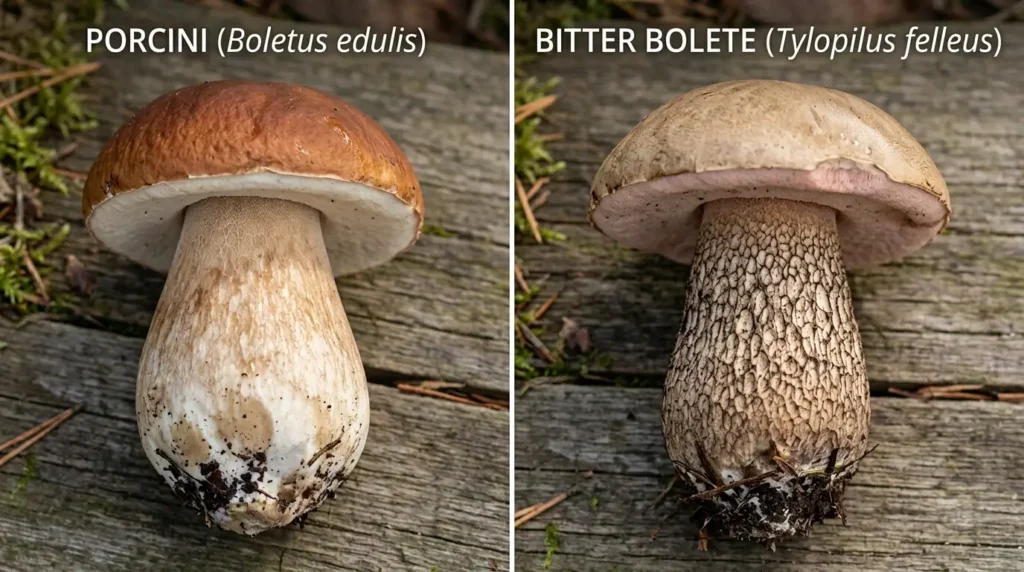
As a general rule, you should be highly suspicious of any bolete that has red or orange pores or whose flesh turns a strong blue when it is cut.
If you ever feel uncertain, then don’t eat it; in some cases the safest thing to do is to leave the mushroom alone, and it’s not worth the risk to eat it.
When you’re going on your trips, take a local expert or a good regional field guide with you, particularly during your first few visits, and have your discoveries checked by an experienced person before cooking them.
Rules Before You Go
The rules about foraging differ greatly in different places: in some parks and forests people are allowed to harvest their own mushrooms, in others a permit is needed, and in some cases foraging is completely forbidden.
You should first look at the local regulations and must never take mushrooms from private land without asking for permission.
Only pick the ones that you intend to use and leave the smaller and younger mushrooms so that the area can continue to produce.
Using Porcini Mushrooms
As porcini mushrooms do not keep for long, it is necessary to clean them quickly. Rather than washing them, remove the dirt with a soft brush or a dry cloth since they absorb water like a sponge and should be cooked within a day or two.
If you have more porcini mushrooms than you can eat, then cut them thin and dry them. Dried porcini mushrooms are full of flavour and will keep for months in a sealed jar, and a small amount rehydrated in hot water will make any soup or stew taste wonderful.
Another option is to sauté them and freeze them, since this is a good method of making the most of a large quantity.
Also read: Forage Radishes: All You Need to Know and 7 Forage Seed Mistakes That Ruin a Pasture

2 Comments