Cleavers (Galium aparine): Remedies, Perks, Scientific Data
Cleavers (Galium aparine) are also called goosegrass, stickyweed, catchweed bedstraw, clivers, or sticky willy (and if you’ve ever brushed past a patch, you’ll see why!). It’s a fast-growing annual climbing herb in the Rubiaceae (coffee) family.
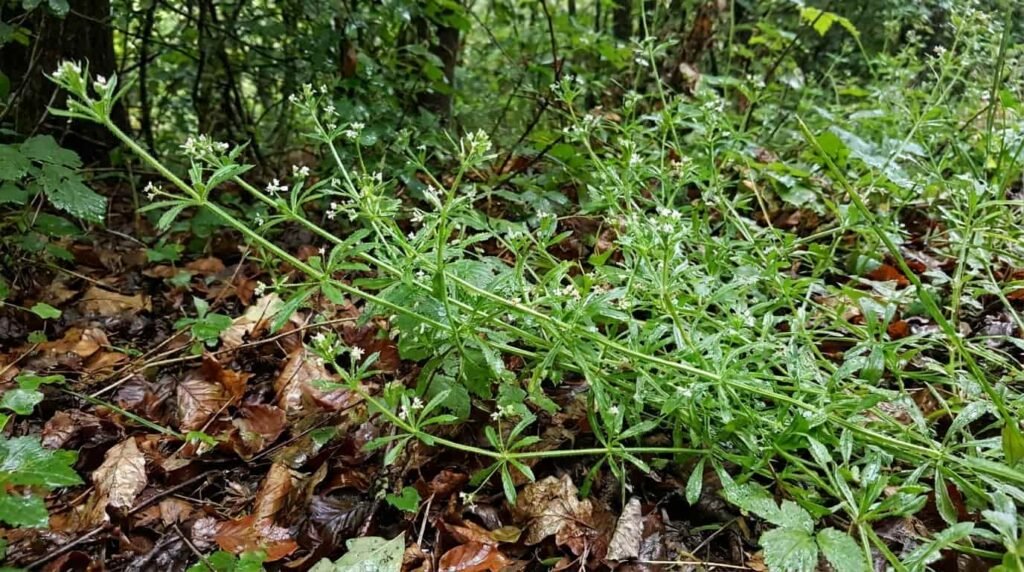
It has Square stems and whorls of narrow leaves, densely covered in tiny hooked bristles that stick to your clothes. It’s found throughout Europe, Asia, and North America.
It has a long history of use in folk medicine as a mild cleansing herb, a traditional diuretic, and a skin and lymph tonic. The modern research on it is largely lab and animal work, so it’s promising but by no means proven in humans.
Galium aparine benefits that are most commonly cited are antioxidant activity, immune modulation, liver protection, and cytotoxicity against cancer cells in vitro. Some of that has some fairly solid early evidence behind it, and some of it is still very much in the realm of folklore requiring a proper clinical trial to back it up.
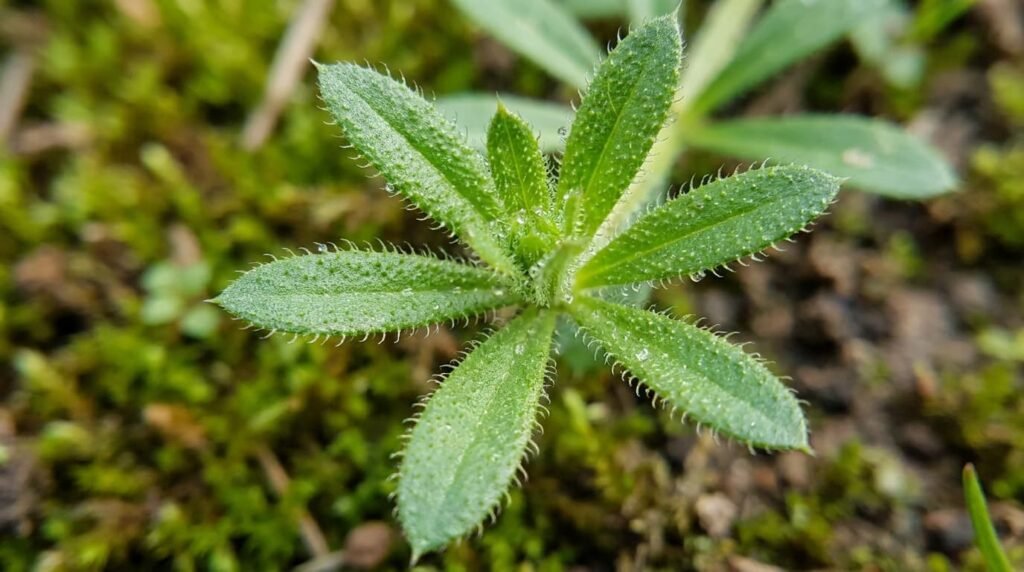
Table of Contents
Cleavers Composition
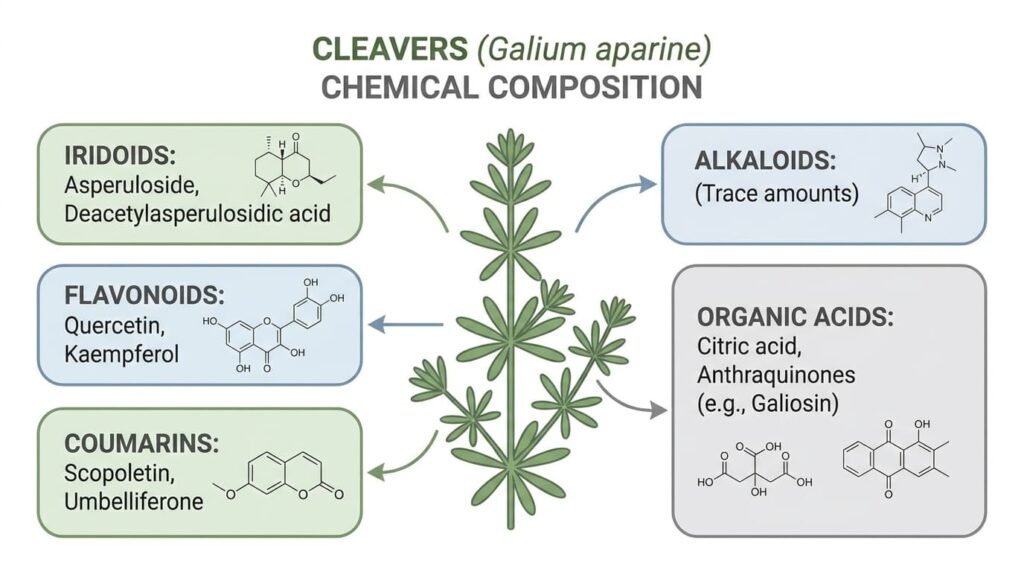
Galium aparine contains flavonoids, phenolic acids, iridoids (including asperuloside), tannins, coumarins, and saponins. One review of its chemical constituents lists antimicrobial, anticancer, and hepatoprotective effects as the main pharmacological themes in earlier studies.
The flavonoid list is where it gets interesting. Compounds in G. aparine include astragalin, hyperoside, isoquercitrin, kaempferol, and luteolin.
Keep in mind that a compound being present doesn’t mean it’s present in a useful amount. A study found that phenolic content varied noticeably between commercial and lyophilized cleavers material. Where and how your plant was grown and prepared matters.
Traditional Cleavers Remedies
Herbalists have used cleavers for a long time, mostly as a spring tonic. The tips below reflect common traditional practice, not clinical guidance, so treat them as background rather than a prescription.
Cold infusion. This is the classic. Fresh cleavers are steeped in cold water for several hours or overnight, then strained and drunk. Many herbalists prefer cold water for cleavers because the plant is fairly delicate, and you’ll often see the fresh herb recommended over dried.
Fresh juice. Pressing the young plant produces a green juice that traditional herbalists used as a cleansing tonic. It’s quite bitter, so expect to dilute it.
Poultice or wash. The crushed fresh herb has been applied to minor skin irritations and used as an infusion for a skin wash. This ties in with its folk reputation as a skin herb.
Roasted seeds. Because cleavers is a relative of coffee, the seeds have been roasted and ground as a caffeine-free coffee substitute. It’s more of a fun forager’s project than a remedy, but it’s a neat reminder of the family connection.
If you forage your own, pick young growth in spring before the seeds harden, stay well away from roadsides and sprayed fields, and wash everything thoroughly. Also be completely sure of your identification before you eat or drink anything wild.

Science Behind the Perks
This is where we separate the well-supported claims from the hopeful ones. Almost everything below comes from cell cultures or animal studies, so none of it should be read as proof that drinking cleavers tea will treat a disease.
Immune activity. Researchers made ethanolic extracts of G. aparine at three strengths and found that all stimulated the transformation of immune blood cells in vitro, with the 96% ethanol extract being the most active. The authors were clear that the mechanism needs more research.
Liver protection. Cleavers have been traditionally used for jaundice. A study showed that rats pretreated with the extract showed less acetaminophen-induced liver damage, with lower liver necrosis and reduced ALT, AST, and bilirubin levels. The effect on hepatic encephalopathy was limited, though, so the benefit wasn’t across the board.
Cancer cell research. This is the most heavily studied area, and also the easiest to over-hype. A study found that a methanol extract was cytotoxic to two breast cancer cell lines but not to untransformed breast epithelial cells.
A 2026 study on cancer cells reported dose-dependent reductions in cell viability, and a 2026 paper reported that an extract induced apoptosis in HT-29 colon cancer cells and lowered EGFR and ERK-1 levels.
Antioxidant activity. Antioxidant readings come up again and again across the Galium literature, which is consistent with the polyphenol content described above. It’s a reasonable, modest perk, but it’s also true of a lot of leafy herbs.
Safety and Common Sense
Cleavers is generally regarded as a mild herb in traditional use, but “traditional” doesn’t mean “tested.” The sticky hairs can irritate skin, so wear gloves when harvesting if you have sensitive hands.
Because the plant has a reputation as a diuretic, it’s worth talking to a pharmacist or doctor first if you take diuretics, have kidney problems, or are on any regular medication. There isn’t solid safety data for pregnancy or breastfeeding, so it makes sense to skip it there.
Most importantly, don’t swap cleavers for medical treatment, especially for anything serious like cancer or liver disease. If you want to try it as a gentle seasonal tonic, think of it as a supporting character and not the main hero.
Direction Of Research
The honest picture is that cleavers has an interesting chemical profile and a pile of encouraging early results, but very little human evidence. Many Galium effects remain incompletely researched.
What the field needs is standardized extracts, proper dosing studies, and controlled human trials. Until then, enjoy cleavers for what it is: a well-loved traditional herb with real scientific curiosity, and keep your expectations grounded.
Also read: