Organic Protein Powder – Nutritional Benefits
Organic protein powder is a dietary supplement made by isolating or concentrating protein from ingredients like peas, brown rice, hemp, pumpkin seeds, or whey, where the source crops or milk meet certified organic farming standards.
In the United States, that means the USDA National Organic Program, which prohibits most synthetic pesticides and fertilizers, GMOs, and irradiation.
The powder delivers concentrated protein, usually 15 to 30 grams per scoop, along with the amino acids your body needs for muscle repair, enzymes, and hormones. The “organic” part describes how the ingredients were grown and handled, so it is a statement about farming practices and not an automatic guarantee of better nutrition.
A plant-based protein powder can help you close the gap between what your meals provide and what your body requires, especially if you train regularly, eat fewer animal products, or just struggle to hit your numbers at breakfast.
It also helps to know how protein quality, amino acid content, and serving size work, so you’re getting real value out of every scoop.
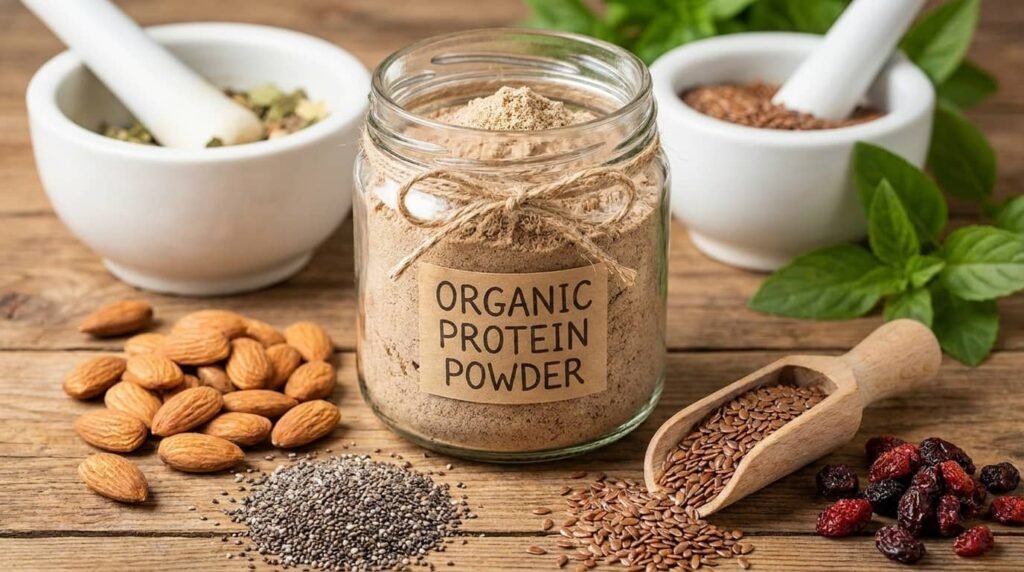
Table of Contents
Daily Protein Requirement
Start with the baseline. Research summarized in the International Society of Sports Nutrition position stand suggests that 1.4 to 2.0 grams of protein per kilogram of body weight per day is enough for most exercising people.
Sedentary adults are usually pointed to a lower figure of about 0.8 grams per kilogram. The same goes: while it’s possible to hit your targets with whole foods alone, supplements are a practical way to get enough high-quality protein without piling on extra calories.
That’s where a scoop of organic protein powder earns its place in your routine. Think of it as a tool for filling gaps, not a replacement for meals.
If you’re already eating eggs, beans, fish, and yogurt, you may not need it, so check your actual intake before adding one more thing to your shopping list.
Importance Of Amino Acids
Protein is built from amino acids, and nine of them are essential, meaning your body can’t make them. Leucine gets the most attention because it helps switch on muscle protein synthesis.
The ISSN guidance points to doses of roughly 20 to 40 grams of high-quality protein per serving, containing about 700 to 3,000 milligrams of leucine, as a useful target for stimulating muscle repair.
Here’s the catch with plant sources. A review in Current Opinion in Clinical Nutrition and Metabolic Care found that animal proteins are generally more digestible and deliver more amino acids to the bloodstream than plant proteins.
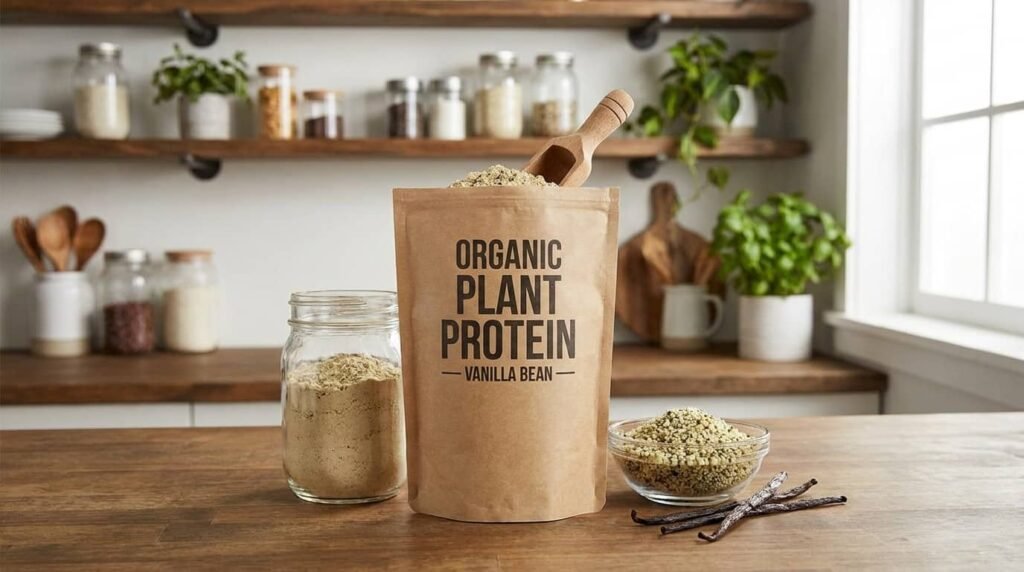
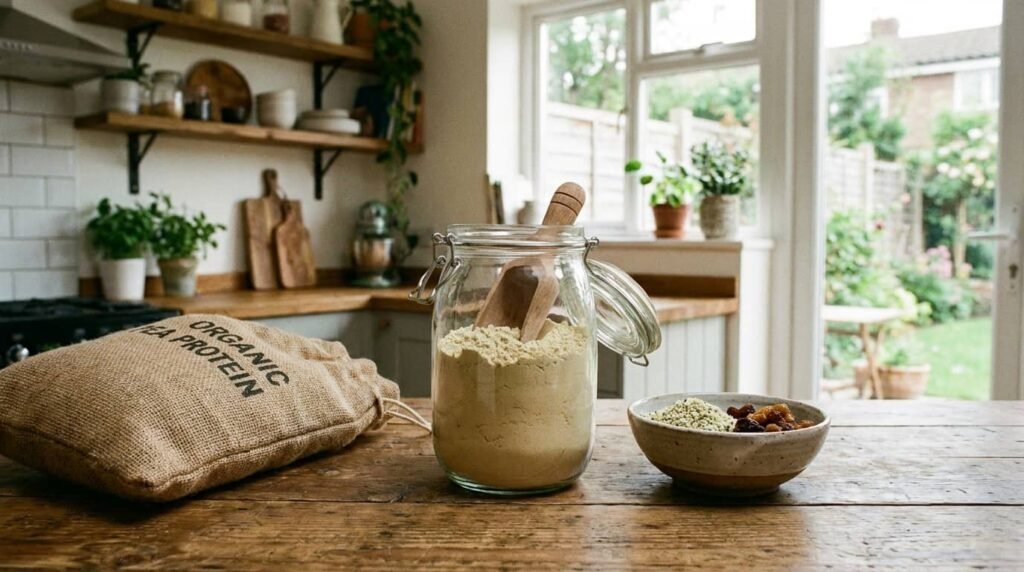
That doesn’t make plant protein a bad choice. It just means you should pay attention to the blend. Pea protein is lower in methionine, while rice protein is lower in lysine, so a powder that combines the two covers more ground than either one alone.
A critical review in Nutrients also lists blending plant sources, or mixing plant and animal proteins, as a practical way to improve the amino acid profile.
Does Plant Protein Build Muscle as Well?
Mostly yes, as long as the total amount is right. A 2026 narrative review in Nutrients reports that long-term resistance training studies show similar gains in muscle mass and strength on plant-based and animal-based diets when protein intake is adequate.
Acute studies often favor animal protein for muscle protein synthesis, but those are short-term measurements, and they don’t always carry over to the gym floor over months.
If you go plant-based, a slightly larger scoop, or a blended formula, is a simple way to cover the difference. A systematic review and meta-analysis of randomized controlled trials is also worth a read if you want to dig into how animal and plant protein compare for lean mass and strength across age groups.

Everyday Ways to Use Organic protein powder
You don’t need to treat protein powder like a bodybuilder ritual. Some practical ideas:
- Stir a scoop into oatmeal or overnight oats so breakfast carries more than just carbs.
- Blend it into a smoothie with fruit, greens, and nut butter for a quick lunch or post-workout snack.
- Mix it into pancake or muffin batter to raise the protein without changing the recipe much.
- Spread your protein across the day. The ISSN suggests even distribution every 3 to 4 hours, which is easier when one meal is a shake.
A shake works best when it replaces a lower-protein snack, not when it’s stacked on top of a full meal you didn’t need extra help with.
Check Before Buying
Not every tub is equal, so a few quick checks go a long way. Look for the USDA Organic seal and a short ingredient list with no added sugars or fillers. Check the protein per serving against the calories, and look for third-party testing for contaminants like heavy metals.
Organic certification limits certain inputs, but it isn’t a substitute for lab testing, so choose brands that publish their results.
Finally, if you have kidney disease, are pregnant, or take medication, talk to your doctor or a registered dietitian before raising your protein intake.
For healthy, active adults, organic protein powder can be a simple, convenient way to hit your daily targets, so pick one that fits your taste, your budget, and your diet, and use it where it helps most.
Also read:



One Comment