Nutritional Benefits of Fenugreek Herb in Everyday Use
The fenugreek herb (Trigonella foenum-graecum) is an annual plant in the legume family. Its leaves are eaten fresh or dried as a leafy green and seasoning, and its small, hard, golden-brown seeds are used as a spice, tea, and supplement.
Nutritionally, the fenugreek herb stands out for its fiber, plant protein, iron, and plant compounds such as saponins and alkaloids. That is why researchers describe it as a functional food rather than just a flavoring.
If you’re looking for fenugreek nutrition facts and the health benefits of fenugreek that actually hold up, it helps to know that the leaves and seeds are very different foods.
The leaves are light, watery, and rich in vitamins. The seeds are dense, fibrous, and packed with protein and minerals. Matching the right part of the fenugreek herb to your goal makes a big difference in everyday use, so let’s break it down.
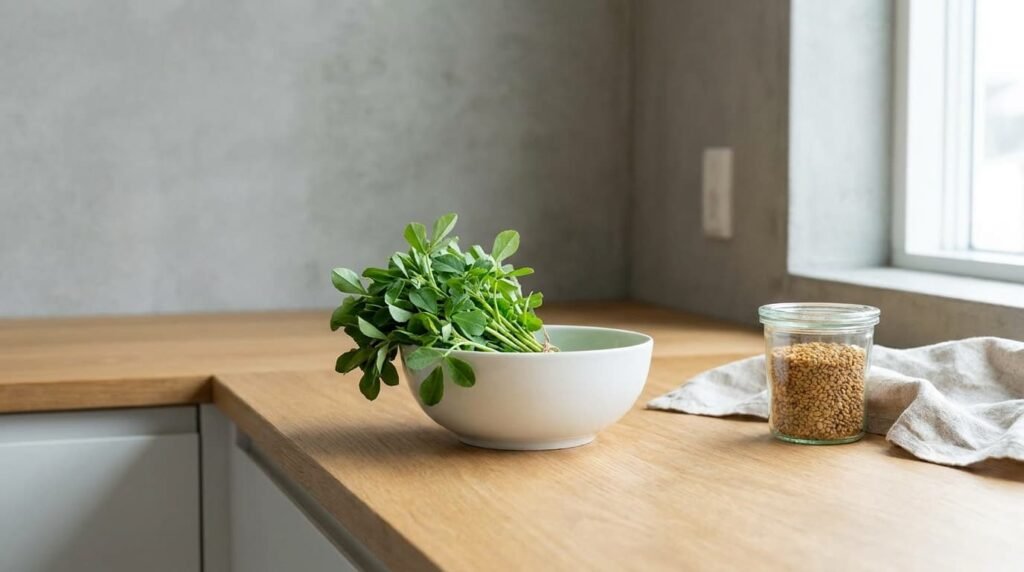
Table of Contents
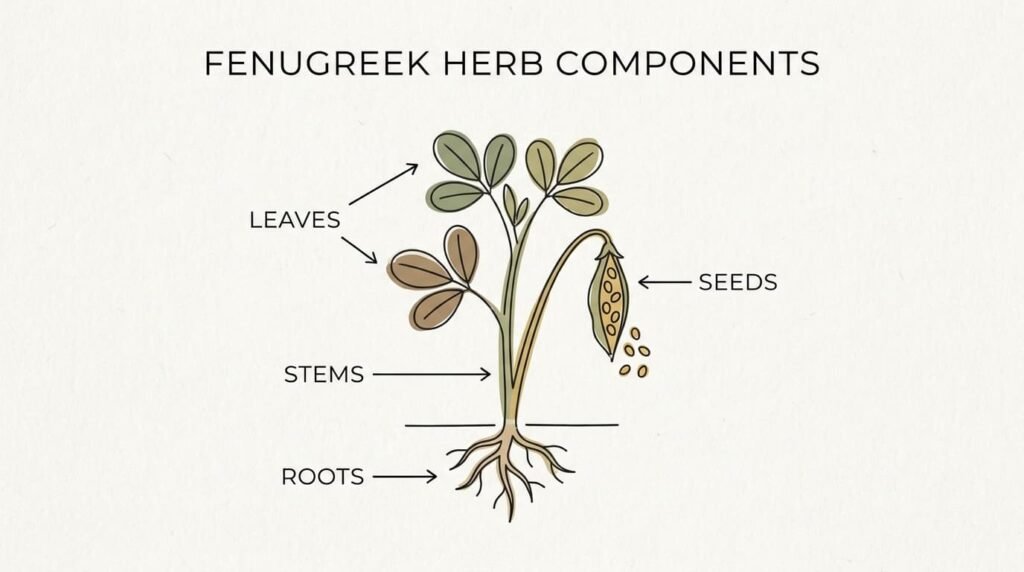
Fenugreek Herb Components
Fenugreek seeds contain roughly 22% to 26% protein, about 58% carbohydrate, around 25% fiber, and less than 1% fat, according to a recent review. That is an unusually high fiber and protein load for something you sprinkle on food by the teaspoon.
The protein is also rich in lysine, and researchers have compared its quality to soybean protein, which matters because lysine is an amino acid that many plant foods run short on.
The leaves are a different story. Fresh leaves are about 86% water, with roughly 4.4% protein and 1.1% fiber, and they supply calcium, iron, phosphorus, riboflavin, carotene, thiamine, niacin, and vitamin C.
The green leaves are especially rich in β-carotene and ascorbate (vitamin C), with fiber, iron, calcium, and zinc levels that beat many regular food items. So if you want vitamins, go for the leaves. If you want fiber and protein, go for the seeds.
Iron and Minerals
Fenugreek contains about 33 mg of iron per 100 g dry weight. Keep in mind that nobody eats 100 grams of dried seeds in a day, so the practical amount from a teaspoon or two is much smaller. Pairing fenugreek with a vitamin C food, like a squeeze of lemon, is a smart move for plant-based iron absorption.
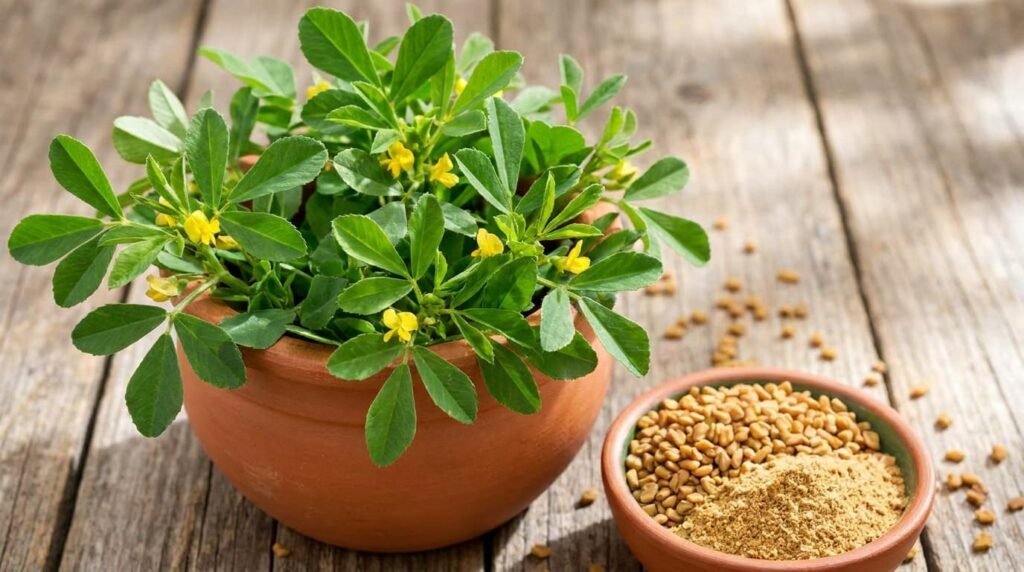
Beyond iron, the seeds are particularly rich in potassium, phosphorus, magnesium, and calcium, based on a review summarized by News-Medical. These minerals support nerve function, muscle contraction, and bone health, so even small daily amounts add up over time.
Fiber, Blood Sugar, and Digestion
Fiber is the headline nutrient, and it’s the reason fenugreek keeps showing up in blood sugar research. The soluble fiber forms a gel in your gut that slows how quickly carbohydrates are absorbed. A meta-analysis of clinical trials found that fenugreek lowered fasting blood glucose by about 0.96 mmol/l, two-hour post-load glucose by about 2.19 mmol/l, and HbA1c by about 0.85% compared with control interventions.
Now for the honest part. The same research team noted that most of the trials were of low methodological quality. A later 2023 meta-analysis covering fourteen trials and 894 participants found that only four were high quality, and its authors flagged study quality and inconsistency as ongoing concerns.
The takeaway is that the results are promising but not final. Don’t treat fenugreek as a replacement for diabetes medication, and talk to your doctor before using larger amounts if you manage blood sugar with medicine.
There may also be a gut angle. The News-Medical summary notes that fenugreek may help restore gut microbiota composition, which could improve metabolic function and glucose tolerance. This is an exciting area, but it’s still early.
Seeds vs. Leaves vs. Sprouts
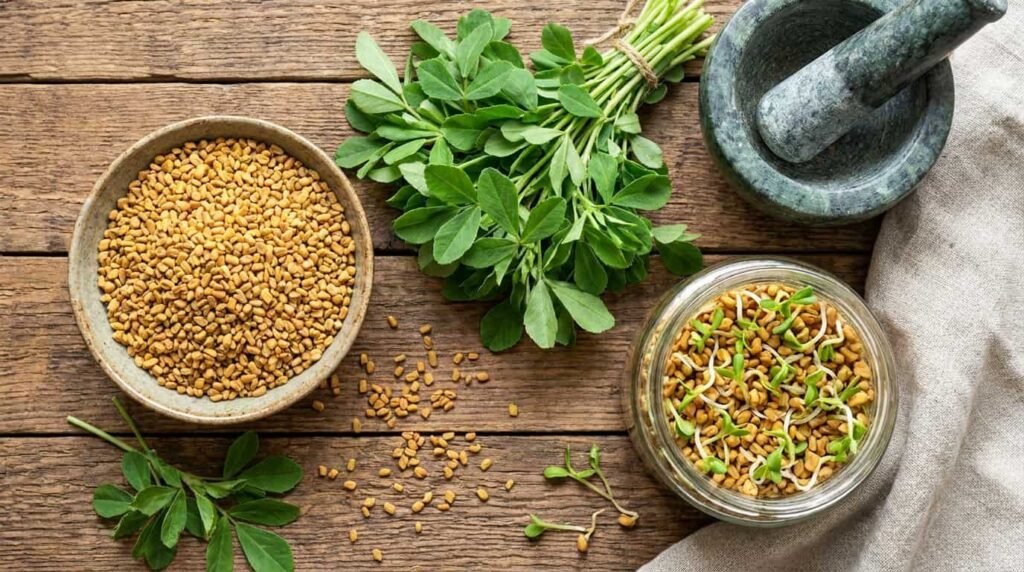
Preparation changes the nutrition you get. Germination increases dietary fiber, while roasting reduces it, and roasted seeds end up with less carbohydrate but more protein.
If fiber is your main goal, skip the dark roast and go for soaked or sprouted seeds instead. Roasting does mellow the bitterness, though, so if raw seeds put you off, a light toast is a fair trade.
Easy Ways to Use the Fenugreek Herb Every Day
A few simple habits make this herb easy to work into normal meals:
- Soak the seeds overnight. Drink the water and chew the softened seeds in the morning, or stir them into yogurt.
- Toss dried leaves (kasuri methi) into curries, flatbreads, and lentils. A small pinch near the end of cooking keeps the aroma strong.
- Cook fresh leaves like spinach. They pair well with potatoes, paneer, or dal, and the slight bitterness balances rich dishes.
- Start small. A teaspoon of seeds a day is plenty at first. Too much, too fast can upset your stomach.
A few cautions are worth knowing. Fenugreek can interact with blood-thinning and diabetes medications, and it is generally advised against in large amounts during pregnancy. If you fall into any of those groups, check with your doctor first.
Used sensibly, the fenugreek herb is one of the easiest ways to add fiber, plant protein, iron, and minerals to ordinary meals without changing your whole diet. Treat it as a smart everyday ingredient rather than a miracle cure, and you’ll get the most out of it.
Also read: