Seiryu Stone Aquascape: Important Facts and Maintenance
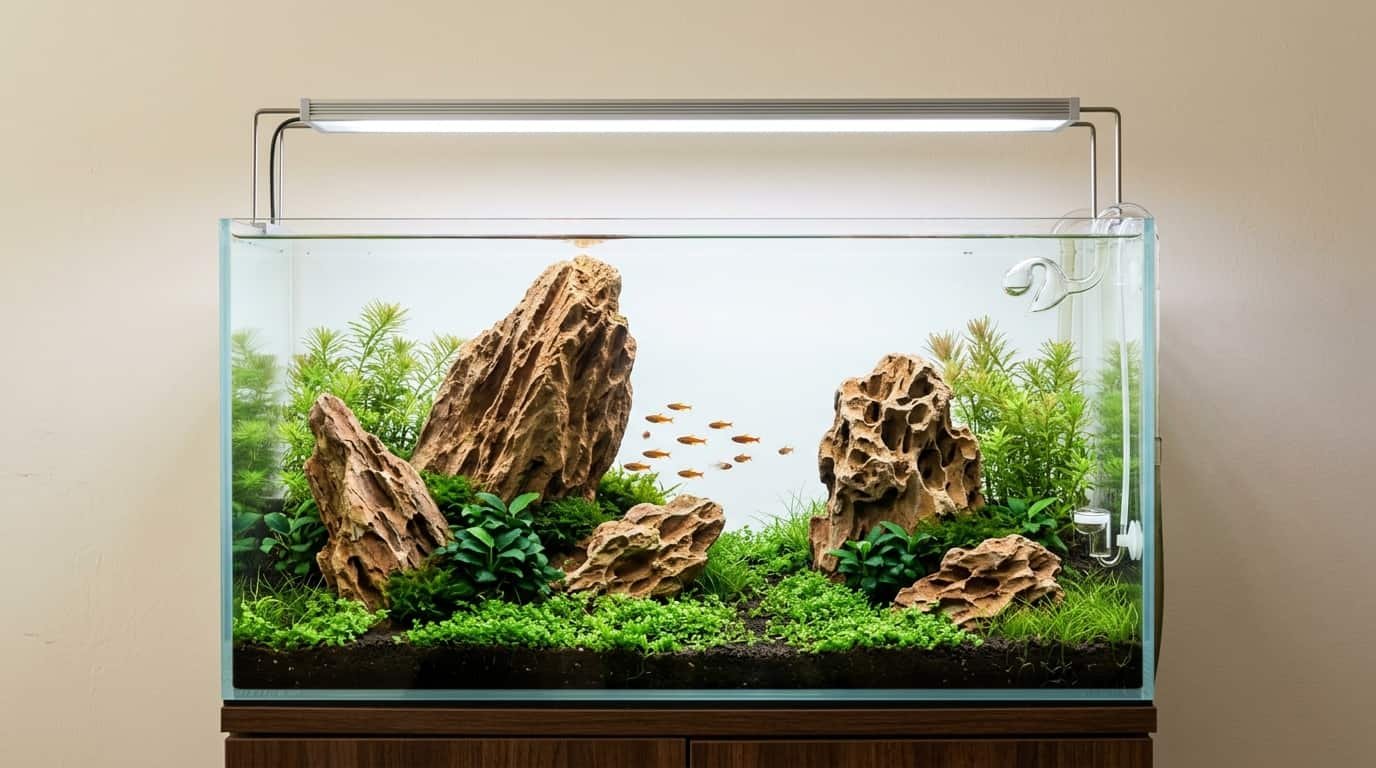
A seiryu stone aquascape is a planted or hardscape-focused aquarium layout built around seiryu stone, a grey-blue, calcium-rich rock with white calcite veins that is prized for its sharp, mountain-like look.
Its name comes from the Japanese for “blue dragon stone”, and aquascapers use it as the main hardscape in iwagumi and other rock-based layouts to create the feel of rugged peaks and ridgelines.
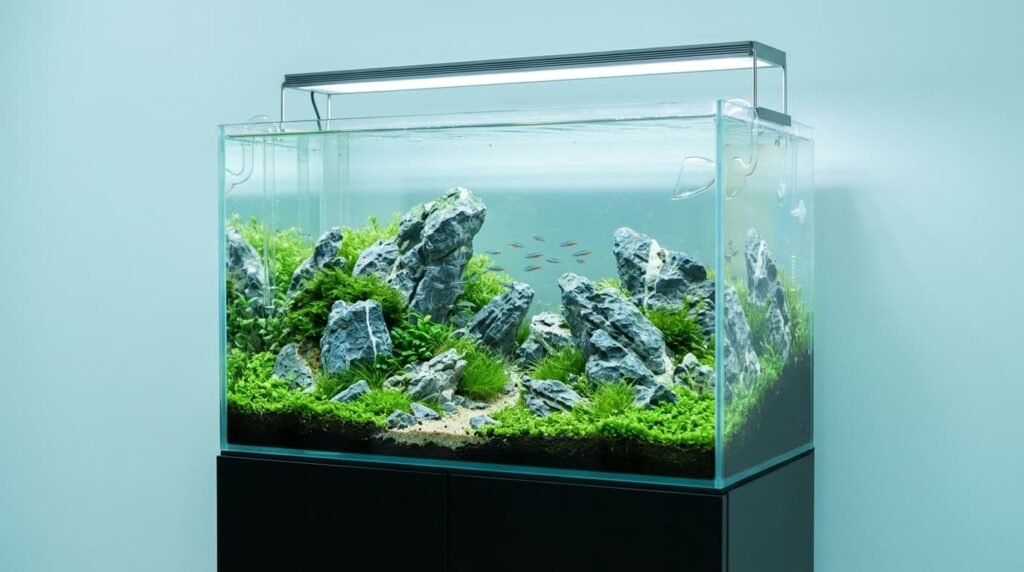
Because seiryu stone is mostly calcium carbonate, it slowly dissolves in water and raises pH and hardness, making it a hardscape choice that shapes both your water chemistry and your design.
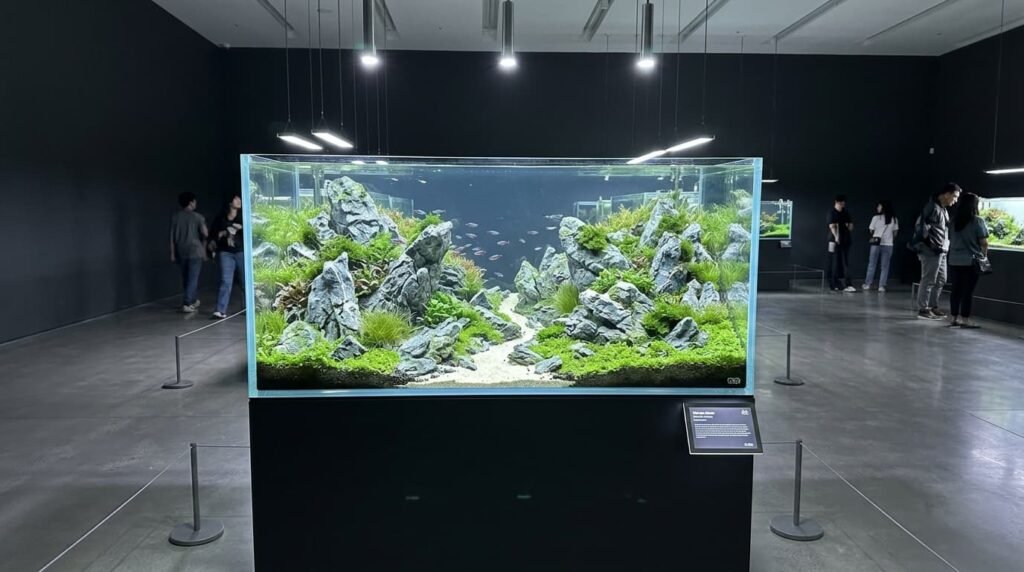
If you’re planning a seiryu stone aquascape, think about the rock first and the plants second. Seiryu is the star of the iwagumi style, where a few carefully placed stones set the whole mood and a simple carpet of foreground plants does the rest.
Choosing the right seiryu stone aquascape layout means balancing looks against water parameters, since the same minerals that give the rock its character will also decide which fish, shrimp, and plants will do well in your tank.
Table of Contents
Effect Of Seiryu Stone On Water
Seiryu is a carbonate-rich rock, and carbonate rocks react with water. Calcium and magnesium are dissolved from rocks like limestone and dolomite.
Bicarbonate and carbonate dissolve carbon dioxide in water, acting on carbonate rocks. In a tank, Seiryu can quietly push up your general hardness (GH), carbonate hardness (KH), and pH over time.
The USGS categorizes water into four categories: soft at 0 to 60 mg/L as calcium carbonate, moderately hard at 61 to 120, hard at 121 to 180, and very hard above 180.
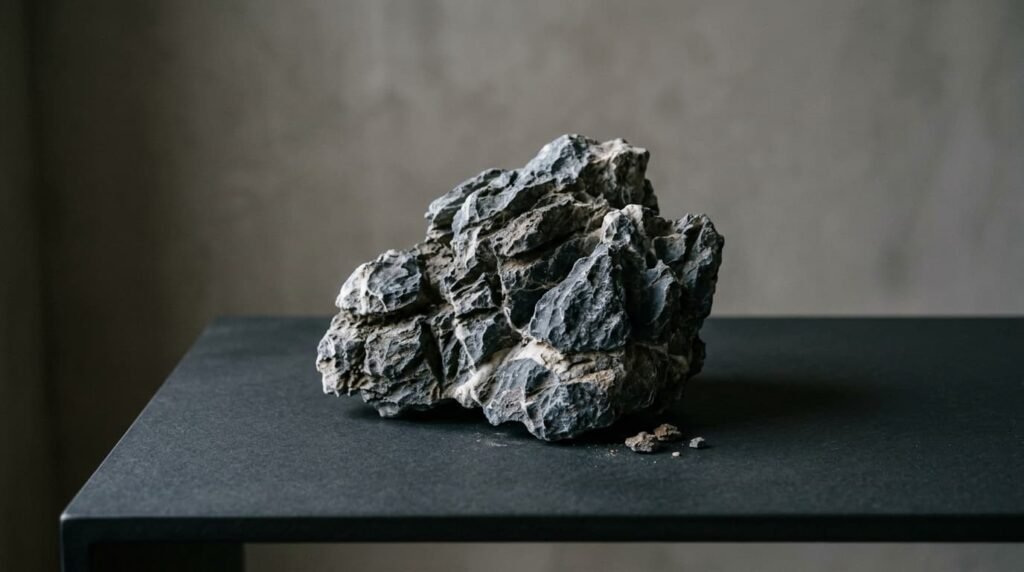
If your tap water is already hard, Seiryu will make little difference. If you’re starting with soft water or reverse osmosis (RO) water, the stone can shift things noticeably, so test before and after you add it.
Keep in mind that the effect is strongest when the tank is new, and the rock surface is fresh. Adding injected CO2 lowers pH and speeds up dissolving, so a tank that looks stable in the morning can drift once the CO2 kicks in. Test at different times of day.
Stones With Visual Appeal
The best seiryu stone aquascape designs rely on a few well-chosen pieces rather than a pile of rocks. Spend time at the shop picking stones that share the same color, vein pattern, and texture, because mismatched stones will read as random no matter how well you place them.
A few things to look for:
- One dominant stone. Often called the oyaishi, this is your main piece. Choose something with a strong angle or face that you can build the whole scene around.
- Supporting stones. Smaller companion stones should echo the angle of the main piece, not fight it.
- Odd numbers. Groups of three, five, or seven tend to look more natural than even numbers.
- Clean veins. White calcite veins are part of the appeal, so look for stones where they run in a direction that flatters your layout.
Dry-fit everything on a table before you touch the tank. Seiryu is heavy and brittle at the edges, so it’s much easier to rearrange on a towel than inside a full aquarium.
Prepping Seiryu Stone
Always rinse and scrub new stones with a stiff brush and plain water before use. Dust and loose grit will cloud your tank, and fine powder from broken edges is the main reason new seiryu tanks look milky for a day or two.
You can also check how reactive a stone is with a simple fizz test. Because the rock is calcium carbonate, a drop of household vinegar on a spare piece will bubble if it contains plenty of carbonate.
Do this outside the tank only, and never soak your finished hardscape in acid, since it can eat into the surface and leave the stone looking dull.
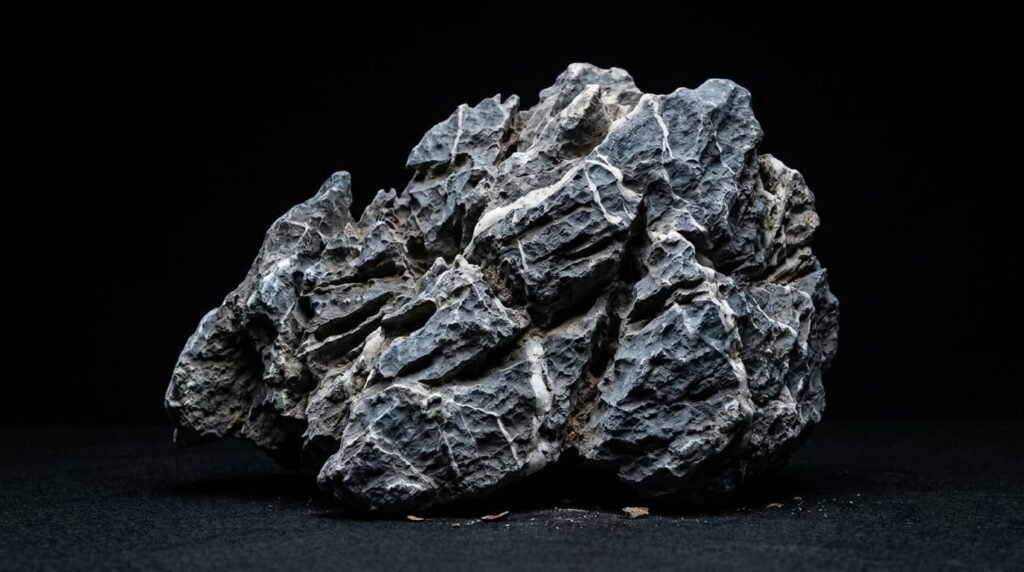
If you’re worried about the stone raising your hardness too much, some aquascapers soak or pre-test their rocks in a bucket of tank water first. Just remember to watch your readings for a few days, because that bucket will tell you far more than any guess.
Building Layout
Once your stones are clean, start your seiryu stone aquascape with the main piece. Place it off-center, usually around one third of the way across the tank, so the scene has a focal point without feeling stiff.
This is the rule of thirds, a classic composition tool, and it works very well with rock-heavy layouts.
Bury the base of each stone a little in the substrate so it looks like it grew out of the ground rather than sitting on top. Angle your supporting stones so their veins and faces point in a similar direction, which gives the scape a sense of movement.
Leave open space too, because empty foreground is what makes a tiny group of stones feel like a vast mountain range.
When you plant, keep it simple. Low carpeting plants such as dwarf hairgrass (Eleocharis) and Glossostigma suit this style well, and they make the grey stone pop.
Do your planting before you flood the tank, and fill slowly so you don’t knock the hardscape out of place.
Matching Fish, Shrimp and Plants to Seiryu
Harder water changes who will thrive in your tank. Research on guppies and bettas found that water hardness affected growth and reproduction differently in each species.
That doesn’t mean harder water is always bad. One study on silver catfish juveniles found that growth was best at 25 to 50 mg CaCO3 per liter, and that a total lack of hardness hurt survival. A bit of mineral content is a good thing, and Seiryu simply makes sure you have some.
As a rough guide:
- Livebearers and many hardy community fish tend to do well in harder, more alkaline water.
- Neocaridina shrimp usually handle the shift better than soft-water specialists.
- Soft-water species such as many Amazonian fish and Caridina shrimp may struggle, so think twice before pairing them with seiryu unless you can keep your parameters in check.
Plants are a similar story. Many popular carpeting plants prefer soft, slightly acidic water, but hardness is not an automatic dealbreaker. Strong lighting, steady CO2, and regular feeding will help them cope, and picking tougher species makes your life much easier.
Keeping the Seiryu Stone Aquascape Stable
The biggest long-term job is watching your parameters. Test GH, KH, and pH regularly during the first month, and keep notes so you can spot trends.
If your numbers creep up week after week, increase your water changes using softer water, which dilutes the minerals the stone keeps adding.
Large, sudden swings are the real danger. Fish cope with high hardness much better than with fast changes, so aim for stability above all else. Do smaller, more frequent water changes rather than huge ones, and match the new water to the tank as closely as you can.
Algae can also settle on rough rock surfaces, especially in a young tank with strong light. Keep your photoperiod modest, don’t overfeed, and give your plants time to take hold before you push the lighting.
If a bit of algae does appear, a soft brush during water changes will keep the stones looking sharp.
Common Mistakes to Avoid
Too many stones is the classic error. A crowded seiryu layout looks busy and takes away the sense of scale that makes the style work, so try removing one stone before you add another.
Another is ignoring your tap water. If you don’t know your starting GH and KH, you can’t predict what the rock will do, and you’ll end up chasing problems instead of preventing them. A cheap test kit pays for itself quickly.
Finally, don’t rush. A good seiryu stone aquascape needs weeks of planning, a few days of fiddling with stone placement, and patient early maintenance, so take your time at every stage and let the scape grow into the picture you had in mind.
Also read:
- The Ultimate Aquascaping Toolkit for a Planted Tank
- Reef Tank Aquascape: How to Place Rock and Coral
- The Betta Aquascape: Layout Rules & How to Set Up
- The Dragon Stone Aquascape: Layout Rules & How to Set Up
- The Iwagumi Aquascape: Layout Rules & How to Set Up
- Dutch Aquascape: Important Facts And Maintenance
- 5 Most Attractive 20 Gallon Long Aquascape Ideas


One Comment