The Dragon Stone Aquascape: Layout Rules & How to Set Up
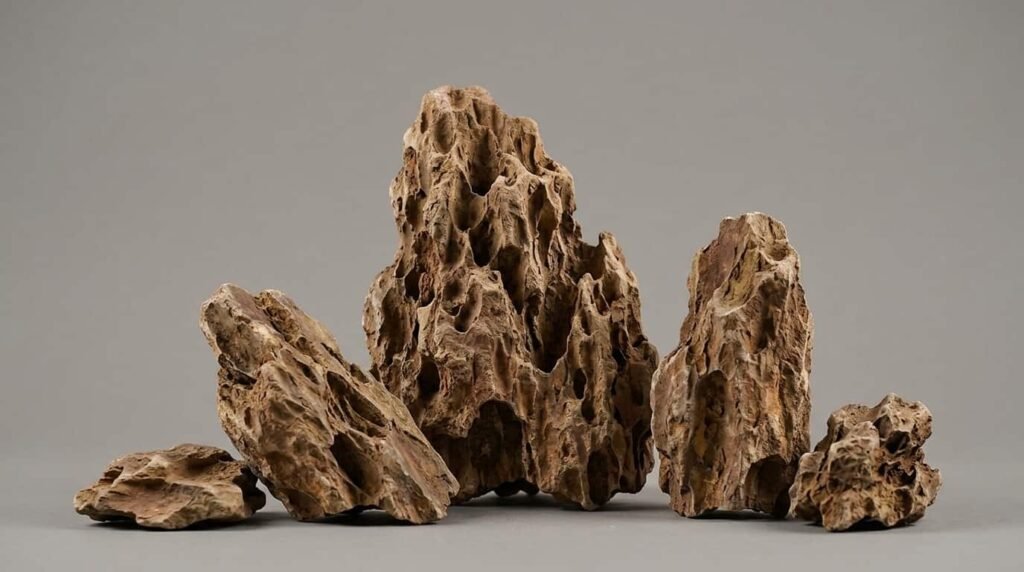
A dragon stone aquascape is a planted aquarium arrangement of Ohko stone (dragon stone). It is a rough, pitted rock that ranges in color from olive to tan and resembles weathered volcanic land or a dragon’s hide.
It is used as the principal hardscape element since its crumbly texture, deep fissures, and rich earthy hue give the appearance of a miniature mountain range or rocky valley.
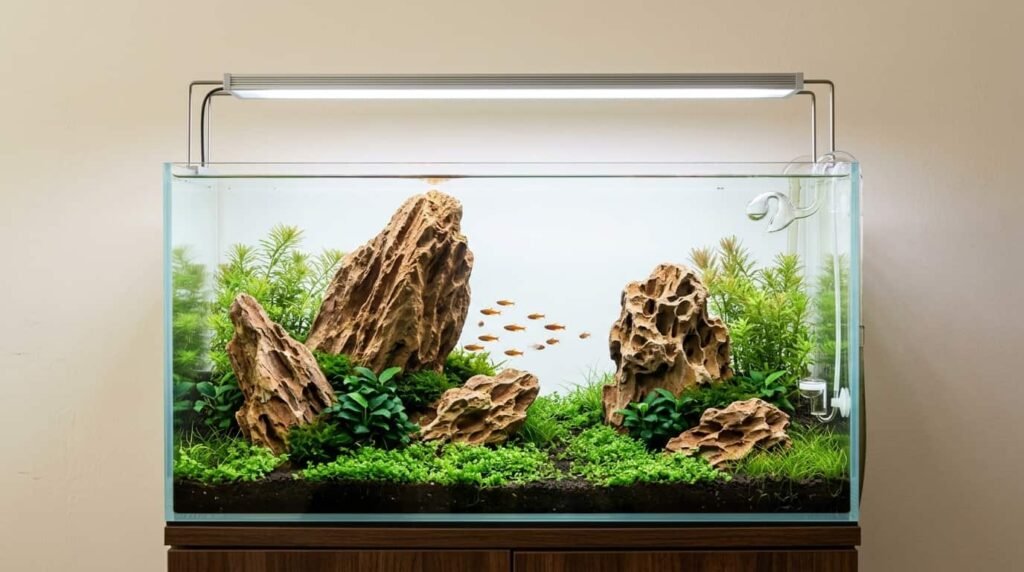
It is mostly inert and therefore safe for most freshwater tanks. When creating a dragon stone aquascape, keep a few crucial points in mind.
Table of Contents
Dragon Stone
Dragon stone is free of calcium, so it usually won’t increase the hardness of your water like limestone or seiryu stone can. That being said, it cannot be guaranteed to be inert, so it’s always necessary to test a sample first.
To do this, place a piece of the stone into a bucket of the tank water and leave it there for a week, then measure the pH and GH. If these values remain the same, you can proceed.
Research into aquarium water chemistry describes how dissolved minerals affect hardness, a point that is worth understanding before you decide on using any kind of rock.
It is often better to select your stones individually rather than buying a mixed bag online.
Look for stones that have a firm and uniform texture, attractive holes, and a flat or steady underside. Do not choose ones that have large flat cut surfaces since these destroy the natural appearance right away.
Dragon Stone Aquascape Core Layout Rules
When placing each stone, always consider the reason for doing so and the location in question. In 90% of cases, you will want to adhere to these rules.
Use odd numbers. Go for odd numbers since three, five, or seven stones seem natural. Even numbers, on the other hand, have the effect of looking arranged and symmetrical, which is the contrary of what you would want in a natural setting.
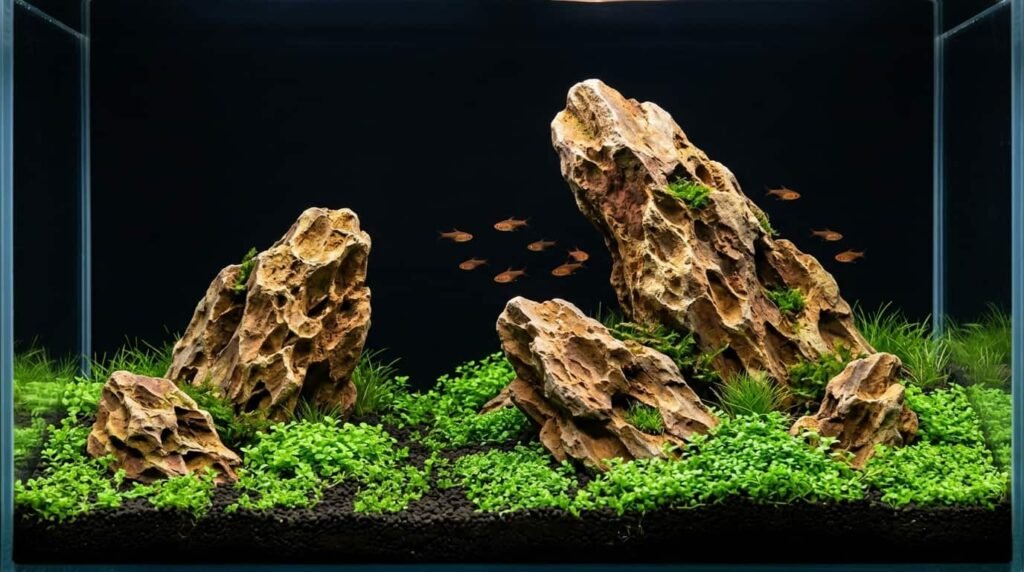
Pick one hero stone. Position the biggest stone off-centre at a point that corresponds to the golden ratio, which is approximately one third of the way across the tank. All the other stones should serve to support this stone, not take away from it.
Match the grain. In nature, rocks have similar layers and angles. Turn each stone over until the cracks and texture are all aligned in the same direction. This single step does as much for achieving a realistic effect as anything else you can do.
Vary the sizes. Change the sizes by combining your main stone with some medium-sized ones and a number of small ones; the small stones work in a way similar to scattered debris at the base of a mountain, giving the impression of scale.
Leave negative space. Having open ground or grass provides the eye with a place to rest, whereas a tank filled with rock gives a cramped feeling and leaves the fish with no room in which to swim.
Choosing a Layout Style
From the very beginning, decide which style is suitable for your tank.
The mountain (triangular) layout puts your tallest stone off to one side and slopes the hardscape down toward the other. It is ideal for beginners.
The island (convex) layout builds a central rock cluster that you can view from all sides. This works best in a tank that sits in the middle of a room.
The valley (concave) layout places taller stones on both sides with an open lower area in the middle, perfect for a carpet of plants and a free-swimming school of fish.
Materials Needed
- Dragon stone (roughly 1 to 2 kg per 10 gallons, depending on your design)
- Aquasoil or a nutrient substrate, plus sand or fine gravel for pathways
- Aquarium-safe superglue gel or epoxy for stabilizing pieces
- Plants suited to the look, such as Anubias, Java fern, Bucephalandra, Monte Carlo, or dwarf hairgrass
- Tweezers, scissors, and a spray bottle for planting and keeping things damp
- A filter, light, and heater that fit your tank and livestock
How to Set Up Your Dragon Stone Aquascape
- Using a clean brush, scrub each stone thoroughly with running water. Do not use any soap. After that, soak the rocks for one or two days to release the dust and loose grit.
- Before laying on any substrate, put the stones into the empty tank and move them about until the arrangement fits together properly. Take photographs from the front and from the sides. Frequently step back to get a better view.
- Construct the foundation by adding the aquasoil and shape it higher at the back to give the scene a sense of depth; then bury one-third of each of the large stones into the substrate. This will secure the rocks and make it as if they emerge naturally from the ground. For the heavy stones, they should be placed on the glass or atop a flat base layer to prevent them from sliding and cracking the lower pane.
- Dragon stone is crumbly, so use gel superglue to join pieces that need to lean or stack. Hold each joint for about 30 seconds. Keep any stacked pieces low and wide at the base, and test the structure with a gentle nudge before you move on.
- Attach epiphytes like Anubias and Bucephalandra straight to the rock with thread or glue, since the rough surface gives their roots plenty to grip. Plant your carpeting species in the open aquasoil areas, and place taller stems toward the back.
- Lay a plate or plastic bag over the substrate and pour water gently on top so your layout doesn’t wash out. Once the tank is full, start your filter and lights.
- Give the system several weeks to establish the beneficial bacteria before introducing any fish. This waiting period helps to protect your fish from spikes in ammonia and nitrite.
Maintenance Tips
Since the pitted surface of the dragon stone easily catches debris and algae, it’s important to carry out regular maintenance.
You should cut back the plants frequently, use a turkey baster to remove the detritus from the crevices, and keep the lighting at a steady six to eight hours each day.
Furthermore, adding algae-eating shrimp or snails will help to keep the surface of the rock clean with no effort on your part.
It should be remembered that the colour of the stone will become deeper as time goes on due to a thin layer of biofilm and moss establishing itself.
Common Mistakes to Avoid
You should not arrange the stones in a straight line since this gives the appearance of a wall rather than a natural landscape. It is also wrong to combine different types of rock because the distinctive texture of dragon stone contradicts that of the smooth river rock.
Furthermore, you must not omit the dry-lay stage since it is the most economical method of correcting a layout problem before water is introduced.
In the end, it’s important to be patient since a magnificent dragon stone aquascape doesn’t usually appear complete on the first day.
If you give your plants a month or so to grow in, you’ll notice the arrangement change from a collection of rocks to a vivid, living small mountain landscape.
Also read:
- The Ultimate Aquascaping Toolkit for a Planted Tank
- Reef Tank Aquascape: How to Place Rock and Coral
- The Betta Aquascape: Layout Rules & How to Set Up
- The Iwagumi Aquascape: Layout Rules & How to Set Up
- Seiryu Stone Aquascape: Important Facts and Maintenance
- Dutch Aquascape: Important Facts And Maintenance
- 5 Most Attractive 20 Gallon Long Aquascape Ideas



4 Comments