The Ultimate Aquascaping Toolkit for a Planted Tank
Aquascaping tools are the specialized instruments used to design, plant, trim, and maintain an underwater landscape in an aquarium. They include long stainless steel tweezers for placing plants, curved and straight scissors for trimming, a substrate spatula for shaping the hardscape base, a siphon for cleaning, and testing equipment for monitoring water quality.
Unlike a standard fishkeeping kit, aquascaping tools are built for precision work inside a tank, so you can arrange stems, moss, rocks, and wood without disturbing the layout or uprooting what you’ve already planted.
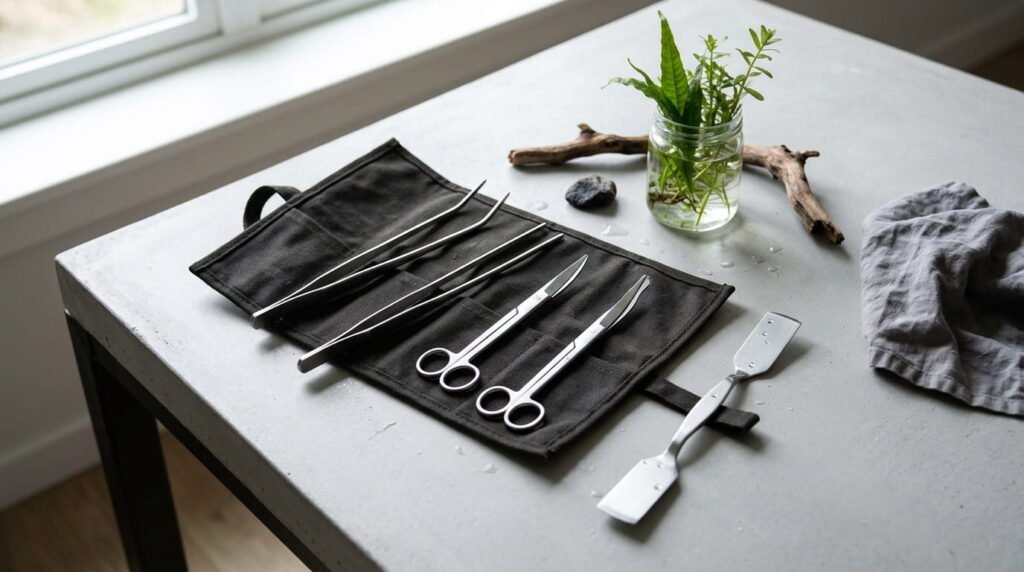
If you’re shopping for the best aquascaping tools, the right planted tank tools can save you hours of frustration and a lot of lost plants. A good aquascaping kit usually covers three jobs: placing and shaping, cutting and cleaning, and measuring.
Pairing the right aquascaping accessories with a basic understanding of lighting, CO2, and water chemistry will make your first layout much easier to pull off. Longer tools, sharper blades, and corrosion-resistant steel matter more than fancy branding.
Table of Contents
Long Tweezers
Always think about where your hands will be when you’re planting. If you’re reaching into a full tank with your fingers, you’ll cloud the water, knock over your hardscape, and pull up stems you planted five minutes ago.
Long tweezers, usually between 25 and 30 centimeters, let you plant a single stem or a small clump of carpet plants exactly where you want them.
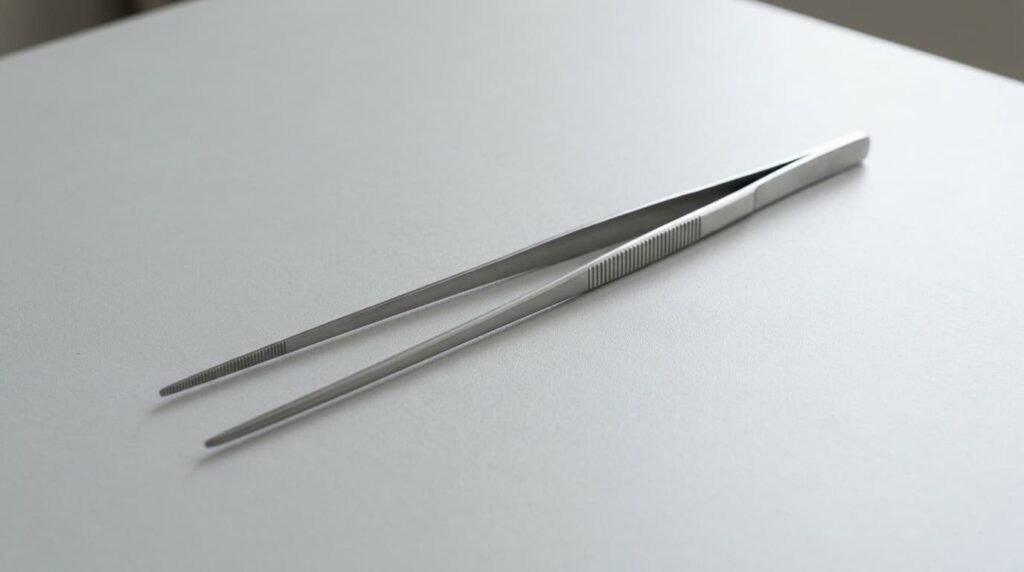
Straight tips are great for grabbing and pushing stems into the substrate, while curved tweezers make it easier to tuck moss or reach behind a rock.
Keep in mind that the tips matter more than the length. Fine, pointed tips are best for small foreground plants, while wider, ridged tips hold heavier stems and wood more securely.
Most people end up wanting one of each, and stainless steel is the safest choice since it holds up in constant contact with water.
Scissors
A decent pair of aquascaping scissors is probably the tool you’ll use most after your first month. Straight scissors are the all-rounder, good for trimming stems to size before planting and cutting back fast growers.
Curved scissors are better for shaping carpets and foreground plants, since the blade follows the contour of the substrate and gives you a cleaner, more natural cut.
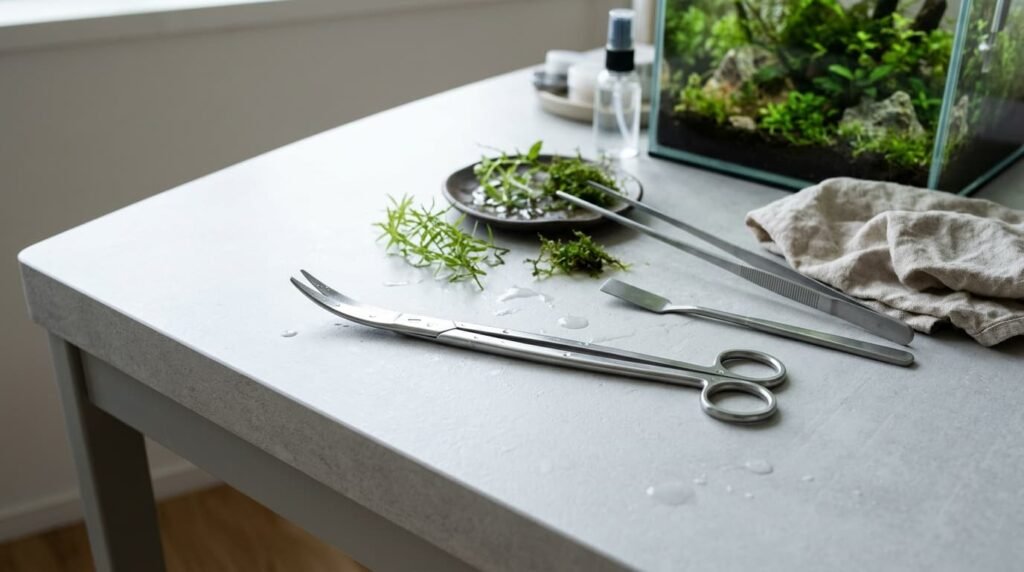
Sometimes it’s more useful to keep a second pair on hand that’s reserved for tough jobs, like cutting thick roots or woody stems, than to ruin your good blades.
Sharp tips also let you cut precisely without bruising the plant, which matters because damaged leaves melt and feed algae.
Spatulas and Substrate Tools
Once you have your hardscape in place, a substrate spatula helps you build up slopes, level the foreground, and press soil around rocks.
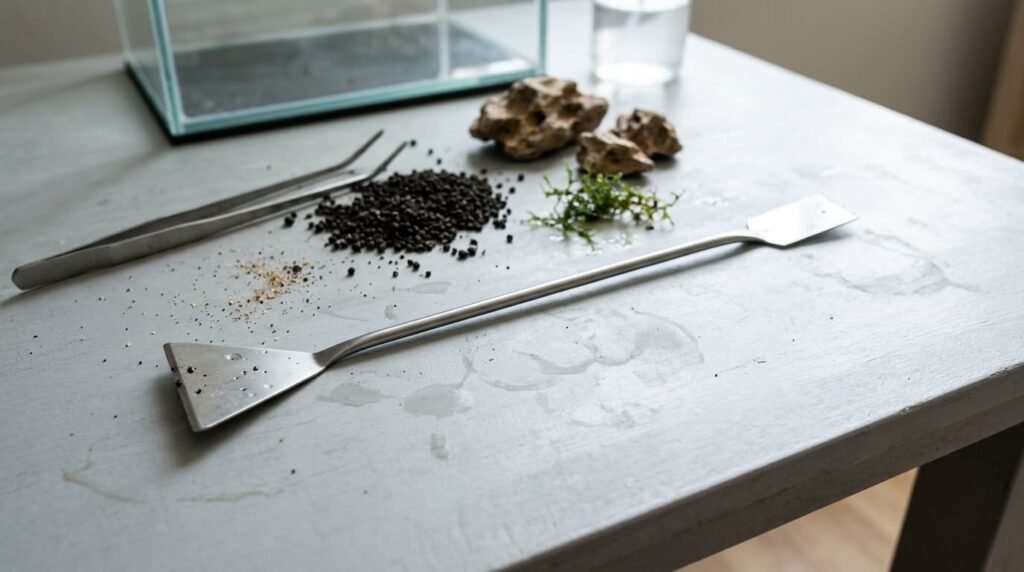
Many spatulas double as a scraper at the other end, which is handy for removing leftover algae from the glass. If you’re working with aqua soil, a spatula also helps you avoid compacting it too much, which can trap gas and harm roots.
Cleaning Tools
A tidy tank isn’t just about looks. Fish and invertebrates are sensitive to waste because ammonia is directly toxic to aquatic animals. Regular maintenance is a basic requirement, not an optional chore.
For that, the most useful tools are:
- A small siphon or gravel vacuum with a narrow nozzle, so you can remove debris without pulling up plants.
- A magnetic glass cleaner or a razor-style scraper, depending on whether your tank is glass or acrylic.
- A soft toothbrush or small brush for scrubbing algae off wood and rocks.
- A fine net for removing floating bits and dead leaves.
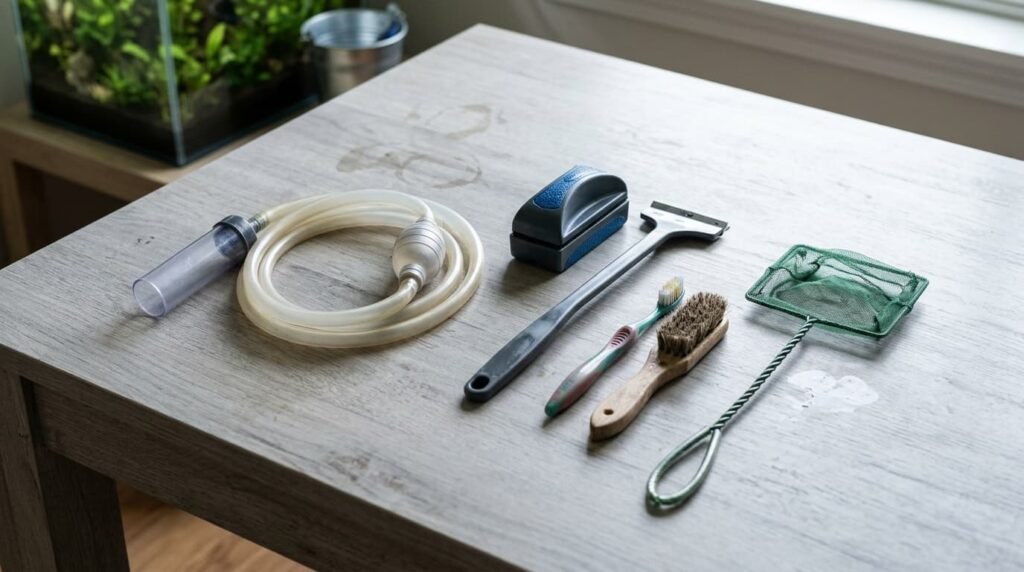
Just remember to keep your cleaning gear separate from anything used around the kitchen or soaps, since residue is harmful to livestock.
Tools That Support Plant Growth
You can own every tool above and still struggle if your plants aren’t getting what they need. Plants underwater face a tougher job than plants in air.
A review of underwater photosynthesis points out that inorganic carbon limitation is much more common for aquatic leaves than for terrestrial ones. That’s the reason many aquascapers add a CO2 diffuser, a regulator, and a drop checker to their kit.
Not every species depends on the same carbon source, though. Research on freshwater macrophytes shows that using bicarbonate is the most widespread carbon strategy among tested submerged plants, which helps explain why some hardy species grow fine without injected CO2.
A dimmable, full-spectrum light also counts as one of your core aquascaping tools, since you’ll want to adjust intensity and photoperiod as your plants mature.
Pair it with a timer so your schedule stays consistent, because irregular lighting is one of the fastest ways to invite algae.
Testing Equipment
Always test before you guess. A liquid test kit for ammonia, nitrite, nitrate, and pH tells you far more than the way your tank looks. A TDS meter and a thermometer round out the basics, and a simple kH and gH test helps if you’re planning to run CO2. Testing is especially important in the first weeks of a new setup, when the biological filter is still establishing and ammonia can spike.
Extras
A few smaller items make a surprising difference. A spray bottle keeps moss and carpet plants moist while you’re planting a dry-start layout.
Rubber bands, thread, or cyanoacrylate gel (aquarium-safe) help attach moss to wood and rock. A turkey baster is perfect for blowing debris off hardscape and for spot-feeding.
A rimless glass lily pipe and spray bar are less about tools and more about equipment, but they’re worth thinking about if you want a clean, minimalist look.
Why the Effort Pays Off
Finally, so the hobby side isn’t left out, there’s good evidence that these tanks are worth the work. A study from the National Marine Aquarium in Plymouth found that higher levels of biota in an aquarium exhibit were associated with longer viewing times, greater reductions in heart rate, and bigger improvements in self-reported mood.
That was a large public exhibit rather than a home tank, but it’s a good reminder that a well-kept, well-stocked aquascape does more than look nice.
If you invest in the right aquascaping tools and keep your maintenance routine steady, your tank can become a calm, rewarding corner of your home.
Also read:
- Reef Tank Aquascape: How to Place Rock and Coral
- The Betta Aquascape: Layout Rules & How to Set Up
- The Dragon Stone Aquascape: Layout Rules & How to Set Up
- The Iwagumi Aquascape: Layout Rules & How to Set Up
- Seiryu Stone Aquascape: Important Facts and Maintenance
- Dutch Aquascape: Important Facts And Maintenance
- 5 Most Attractive 20 Gallon Long Aquascape Ideas

7 Comments