5 Most Attractive 20 Gallon Long Aquascape Ideas
20-gallon long aquascape ideas are design concepts for a tank that measures roughly 30 inches long, 12 inches wide, and 12 inches tall. Because the footprint is wide and the depth is shallow, this tank gives you a long, panoramic canvas that is easy to reach into and easy to light evenly.
Keep in mind that every 20-gallon long aquascape layout needs a cycled tank before you add fish, so read the tips at the end before you buy anything live.
Table of Contents
Iwagumi With a Dwarf Hairgrass Carpet
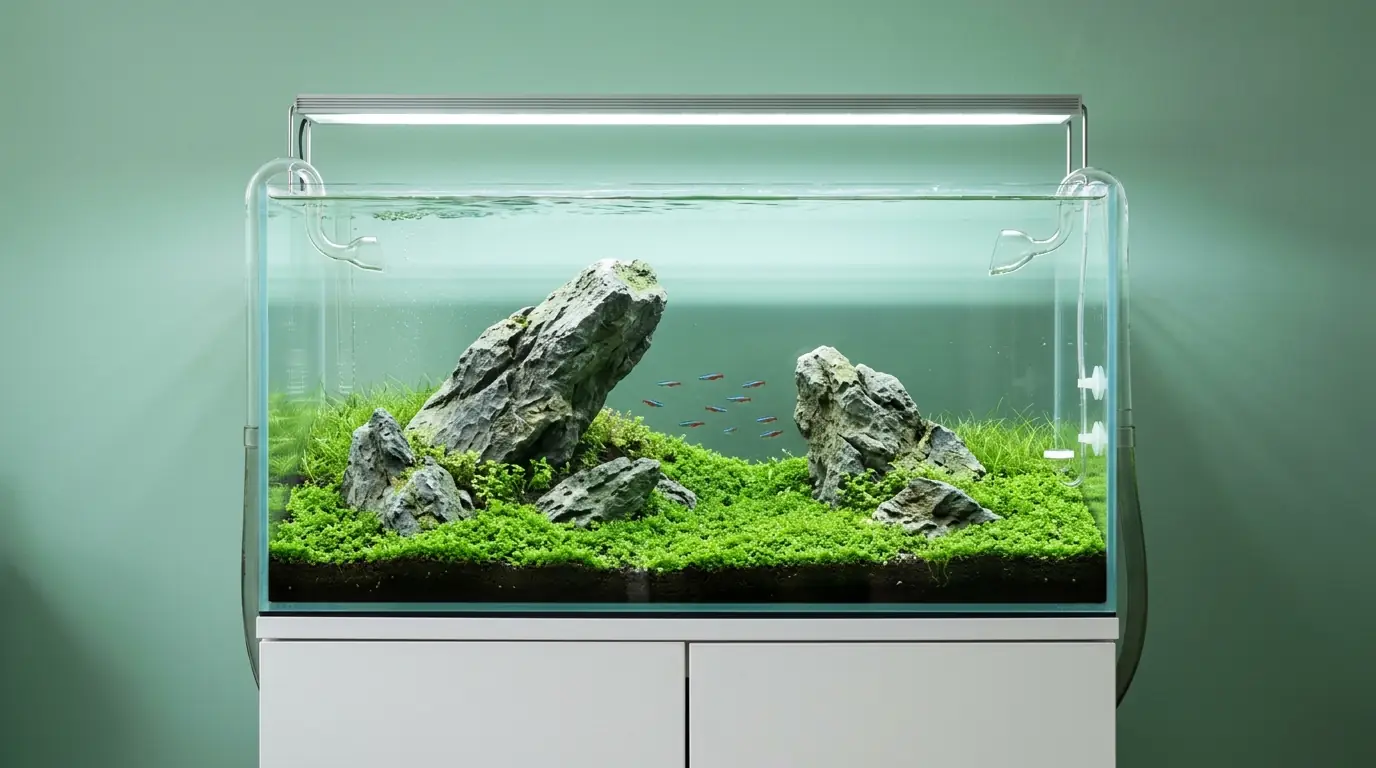
The iwagumi is the minimalist classic. You use a small set of stones, usually an odd number like three, five, or seven, with one large “oyu” stone as the focal point and smaller stones supporting it.
In a 20-gallon long aquascape, place the main stone about one-third of the way across the tank rather than in the center, so your eye has somewhere to travel.
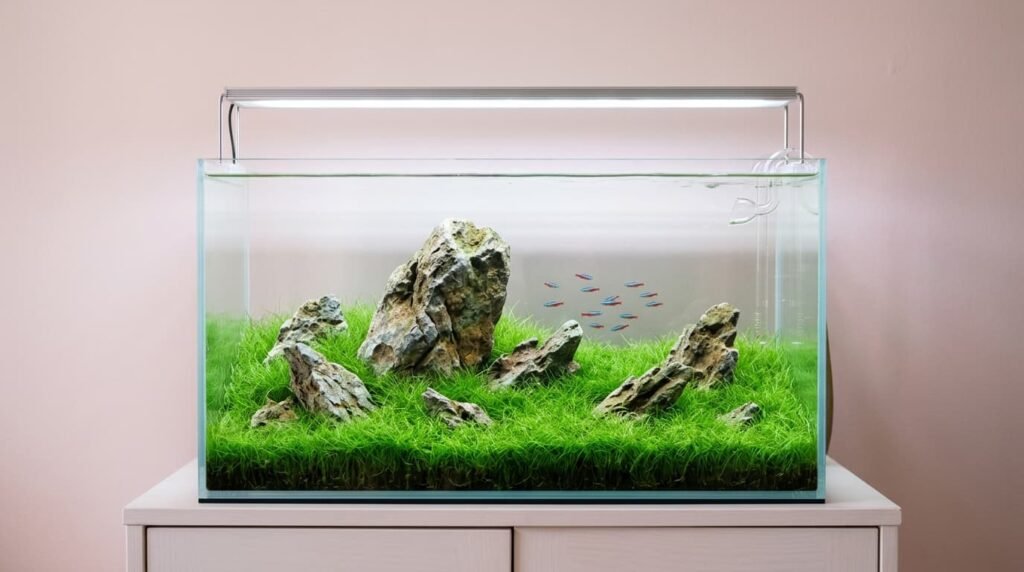
Seiryu stone is the usual pick because its sharp, weathered lines look like a miniature mountain range. Cover the floor with dwarf hairgrass or Monte Carlo, and you get a clean green lawn that makes the rocks pop. A word of warning: carpets are demanding. They need strong light and steady nutrients.
Light and non-carbon nutrients are probably a bigger limit on aquatic plant productivity than the carbon supply. In other words, don’t skimp on your light or your fertilizer, even if you aren’t running CO2.
The Driftwood Forest
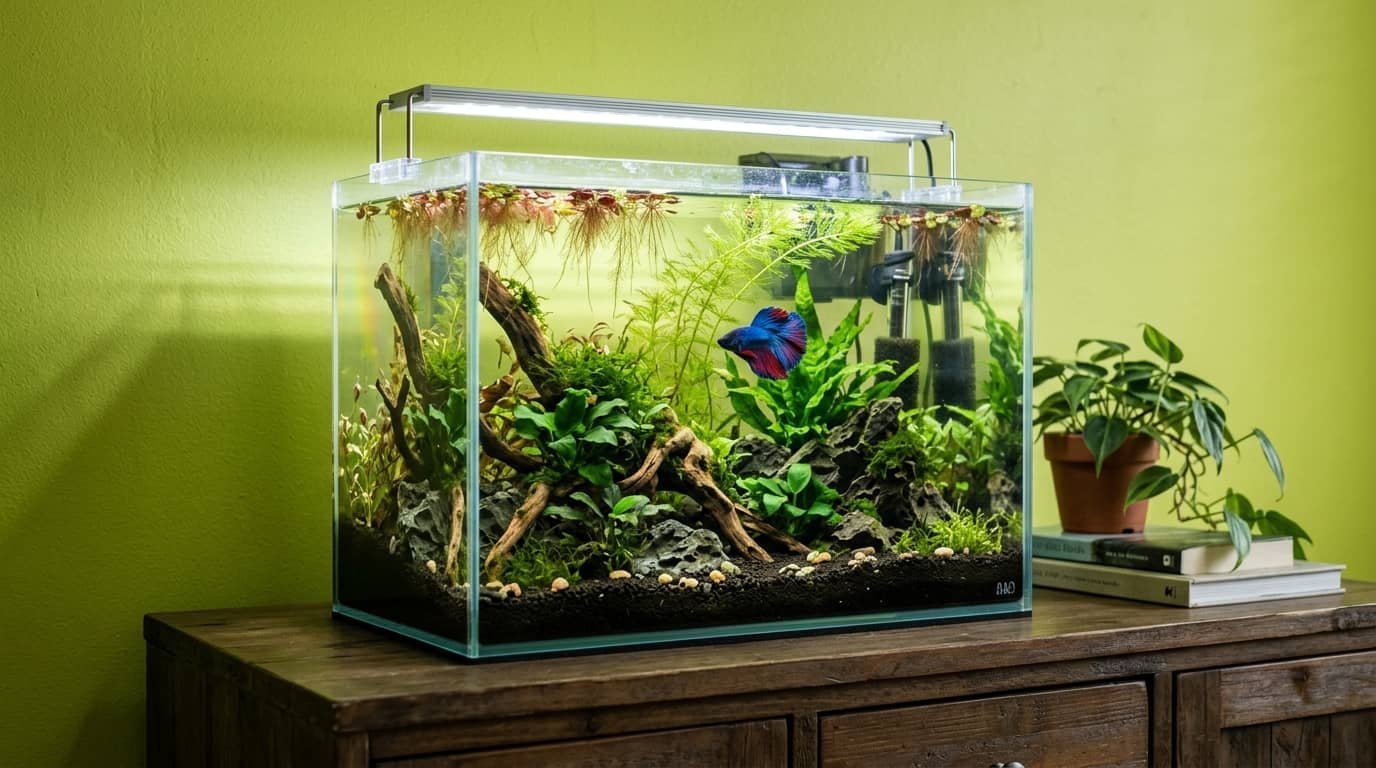
If you want something softer and more organic, build a driftwood forest. Spiderwood or manzanita branches arranged in a loose, branching shape can look like an underwater tree line, and they fill the length of the tank beautifully.
Attach Anubias nana petite and Java fern directly to the wood with thread or glue so you never have to bury their rhizomes, and let Java moss drape over the branches.
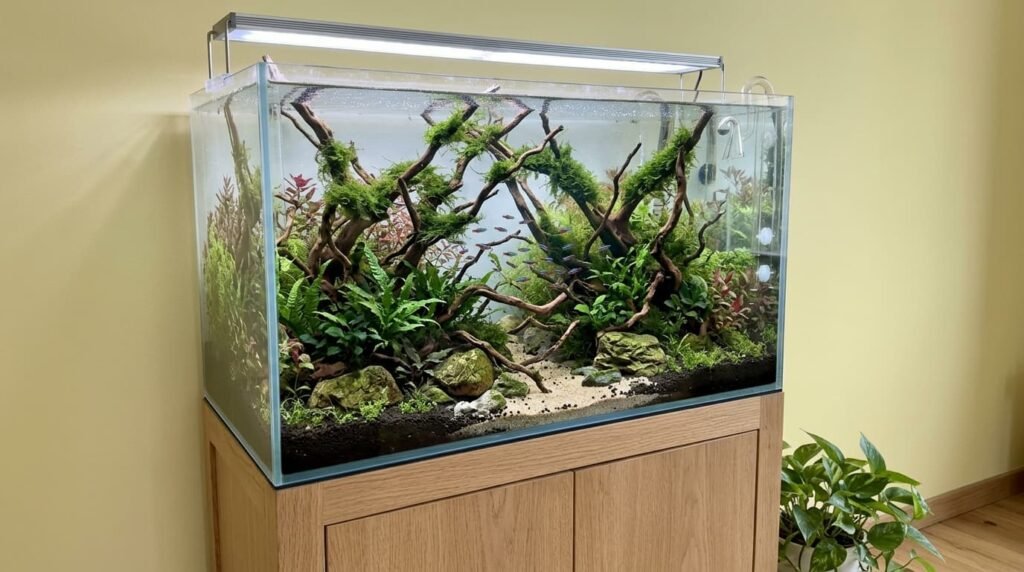
This is one of the easiest 20-gallon long aquascape ideas for beginners, since those plants are happy in low to moderate light and don’t require CO2.
Soak your wood before you plant it, because most pieces will leach tannins and float for a while. A tea-colored tint is harmless, and it can even give the tank a cozy, natural feel.
The Dragon Stone Valley With a Sand River
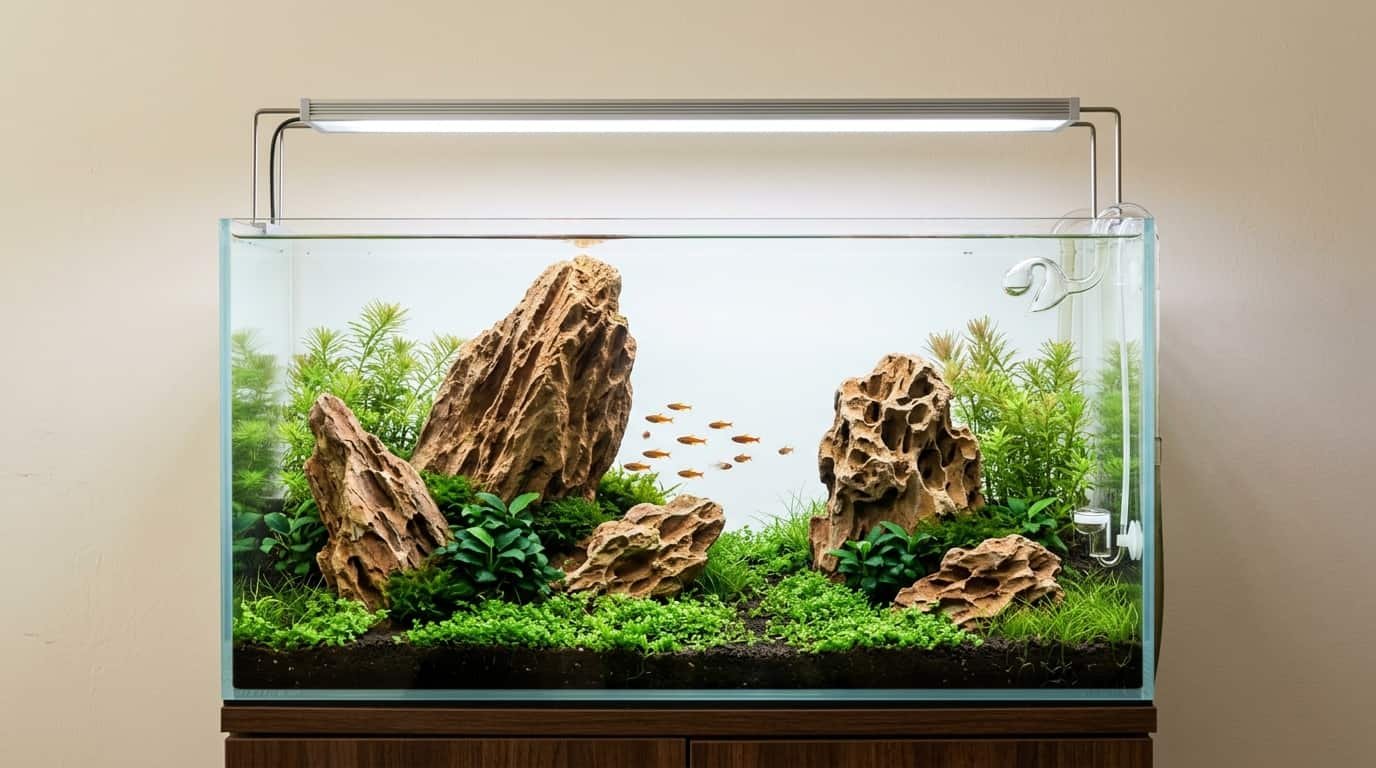
This one is all about contrast. Pile dragon stone (also called ohko stone) in two uneven clusters on the left and right of the tank, then run a path of pale sand between them so it looks like a dry riverbed winding through a canyon.
Plant the stone clusters with Rotala, Java fern, or small tufts of hairgrass to soften the edges.
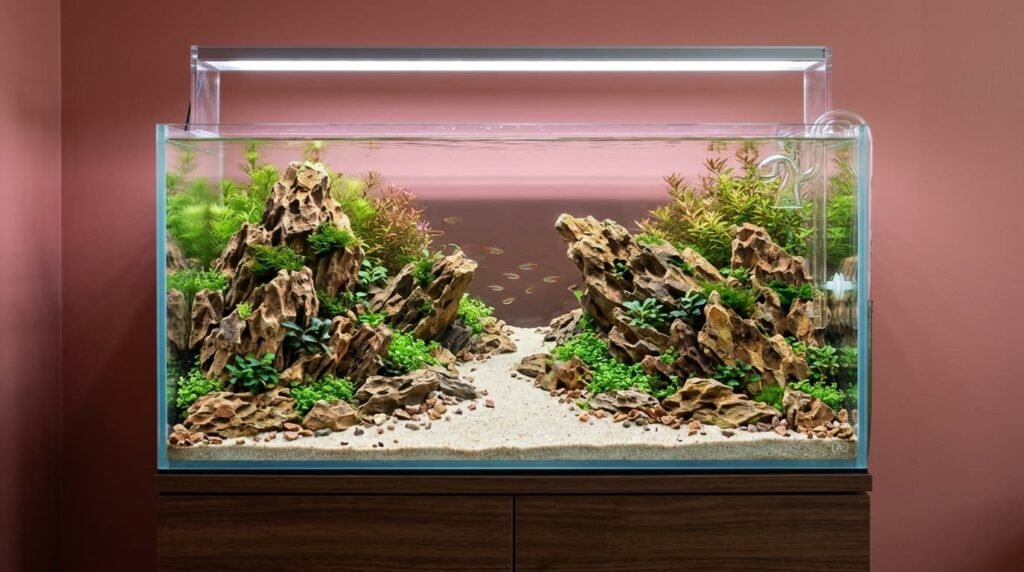
The sand path is what makes it work, because the long, narrow shape of the tank exaggerates the sense of distance. Use a darker, nutrient-rich aquasoil on the planted sides and cap the path with sand.
It’s worth planning the slope before you add water, building the substrate higher in the back so the “river” appears to widen toward the front.
The Dutch-Inspired Stem Plant Jungle
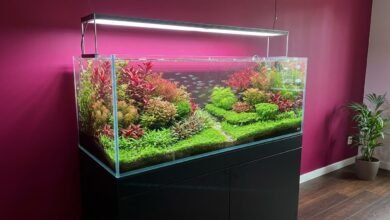
For maximum color, go Dutch. This style skips big rocks and focuses on dense groups of stem plants in contrasting colors and leaf shapes.
Pair red Rotala or Ludwigia with bright green Hygrophila and feathery Cabomba, grouping plants in neat “streets” that step up in height toward the back.
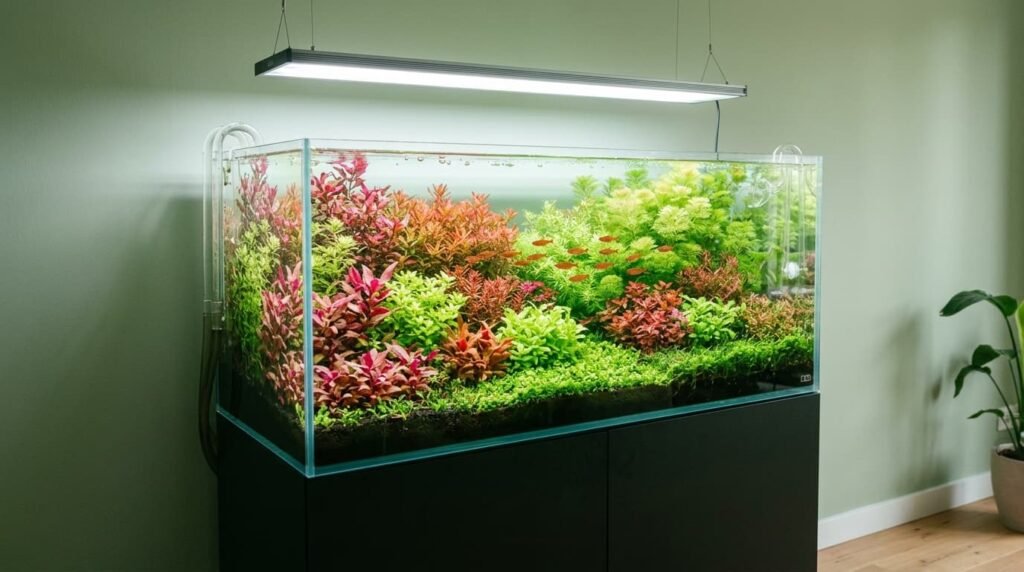
The 12-inch depth of a 20-gallon long aquascape is a real advantage here, since your light easily reaches the substrate. You’ll need to trim regularly, and a decent fertilizer routine matters more in this style than in any other.
In a study of light and CO2 effects on a carpeting aquarium plant, growth rose with both light and carbon, but with diminishing returns, so more light is not always better. Start with moderate lighting and adjust only if your plants tell you they want more.
The Blackwater Leaf Litter Biotope
Not every attractive tank is bright green. A blackwater biotope uses a sandy substrate, a few dark branches, and a thick layer of leaf litter, like Indian almond leaves or oak leaves, to copy a forest stream.
The water turns a deep amber, and small fish like ember tetras or chili rasboras look like glowing embers against it.
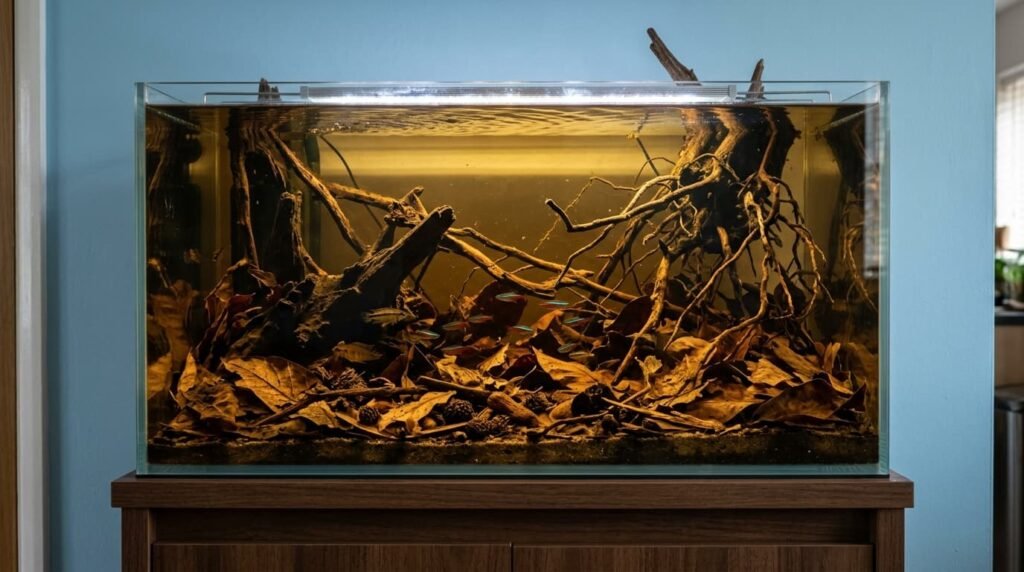
This is a great low-maintenance option, because the leaves also give shy fish places to hide and add grazing surfaces for shrimp. Keep your plant list short, with something like Cryptocoryne or Anubias tucked in around the wood.
Replace the leaves as they break down, and don’t panic if a little brown film shows up in the first few weeks, since that’s normal for a fresh setup.
Final Tips Before You Plant
No matter which layout you pick, cycle the tank before you add fish. Fish waste produces ammonia. University of Florida extension research on ammonia in aquatic systems explains that ammonia is one of the most important water quality parameters for fish after oxygen, and that even trace amounts can be harmful.
The good news is that bacteria do the work for you, and a study on ammonia-oxidizing bacteria in freshwater aquaria identified the microbes responsible for turning ammonia into less harmful compounds.
Water chemistry changes how dangerous ammonia is, too. The toxic portion of ammonia rises sharply as pH goes up, so check your pH as well as your test kit readings.
Finally, don’t overstock. A 20-gallon long aquascape can handle a small school of nano fish, but loading it up on day one is the quickest way to wreck a good-looking scape, so add fish slowly and let your plants and bacteria catch up.
Also read:
- The Ultimate Aquascaping Toolkit for a Planted Tank
- Reef Tank Aquascape: How to Place Rock and Coral
- The Betta Aquascape: Layout Rules & How to Set Up
- The Dragon Stone Aquascape: Layout Rules & How to Set Up
- The Iwagumi Aquascape: Layout Rules & How to Set Up
- Seiryu Stone Aquascape: Important Facts and Maintenance
- Dutch Aquascape: Important Facts And Maintenance