5 Health Benefits of Organic Quinoa in Everyday Use
Organic quinoa is the edible seed of the Chenopodium quinoa plant, grown without synthetic pesticides, fertilizers, or genetically modified seed. It is certified under organic farming standards.
Although you cook and eat it like a grain, quinoa is technically a pseudocereal, meaning it is a seed that behaves like a cereal grain in the kitchen.
It is naturally gluten-free and is known for its high-quality protein, dietary fiber, minerals, and plant compounds such as polyphenols. A study of Antioxidants notes that its amino acid profile and digestibility are comparable to beef and far above rice, wheat, and corn.
If you are looking at quinoa’s health benefits for daily meals, the research points to a few areas where it earns its place on your plate: steady blood sugar, heart health markers, digestion, and plant-based protein. Choosing organic quinoa gives you these nutritional perks with lower exposure to synthetic farming chemicals.
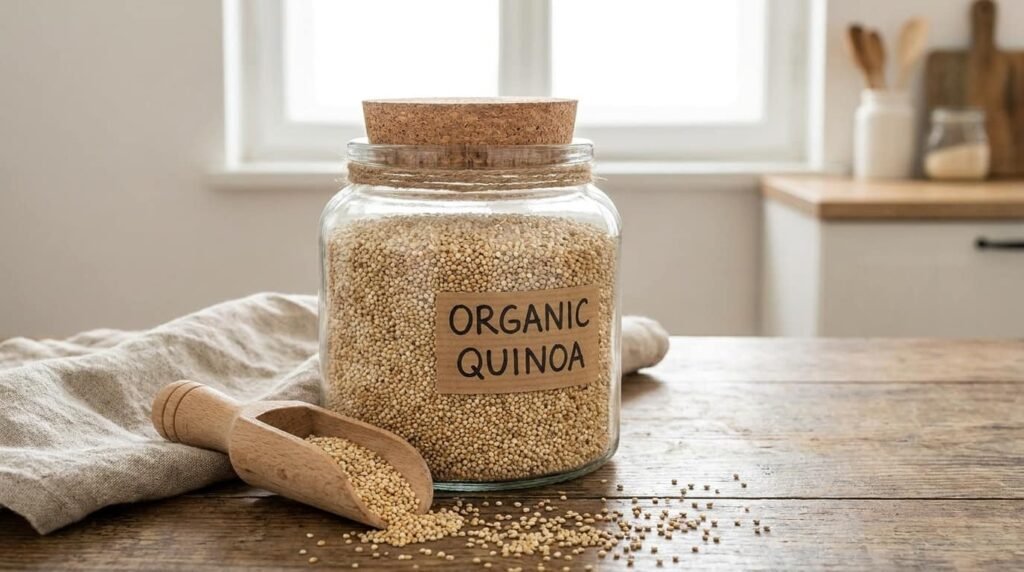
Table of Contents
Organic Quinoa Composition
Before getting into the benefits, it helps to know what you are working with. According to the USDA FoodData Central database, a cup of cooked quinoa gives you roughly 8 grams of protein and around 5 grams of fiber, along with magnesium, manganese, phosphorus, and copper.
Quinoa contains phenolics, saponins, phytosterols, and vitamins on top of its core nutrients.
Quinoa is also one of the few plant foods that contains all nine essential amino acids, which is why it gets called a “complete” protein. If you eat little or no meat, this makes it an easy and useful swap for refined grains.

Heart Health
This is where most of the human research sits, so it is worth taking seriously, but not overselling. Phytosterols in quinoa can inhibit intestinal absorption of lipids and increase bile acid excretion, which is one proposed way it helps with cholesterol.
The same paper discusses a 12-week study in which adults ate 25 g or 50 g of quinoa seeds per day.
Always think about the size of the effect, though. The clinical trials so far are small, and the changes are modest. Quinoa is a better choice than refined grains like white rice or white bread, but it is not a replacement for medication or medical advice.
If you manage diabetes or high cholesterol, treat it as a supporting player in a balanced diet.
Digestion and Gut Health
Quinoa’s fiber is good for intestinal motility and digestive health, and it is naturally gluten-free, so many people with coeliac disease or gluten sensitivity can include it in their meals. Quinoa compounds may help regulate gut microbiota and protect intestinal integrity. Much of that evidence comes from lab and animal studies, so it is promising rather than settled.
One practical tip: if you are not used to a lot of fiber, build up slowly. A big bowl every day from the start can leave you bloated, so begin with a half cup and work up.
Antioxidants and Inflammation
Quinoa seeds carry flavonoids and other phenolic compounds that act as antioxidants. More research is needed on its potential for controlling chronic disease. The early signs are encouraging, but we still need large human trials to confirm them.
Where Organic Fits In
Choosing organic quinoa mainly comes down to what you would rather not eat. Organic standards restrict synthetic pesticides and fertilizers, so you are less likely to take in residues from them.
Nutrition research does not show that organic quinoa is richer in protein or fiber than conventional quinoa, so buy it for the farming practices and not for a nutrient upgrade.
Quinoa seeds are also coated with saponins, natural compounds that taste bitter or soapy. Most packaged quinoa is pre-washed, but rinsing it under cold water in a fine mesh strainer for about a minute is cheap insurance, so don’t skip it.
Easy Ways to Use It Every Day
You do not need a special recipe to get started, so keep it simple:
- Swap it in for white rice at dinner, using about two parts water to one part quinoa.
- Cook a big batch and keep it in the fridge for grain bowls, salads, and soups through the week.
- Stir it into breakfast porridge with fruit and nuts.
- Use it in veggie patties or stuffed peppers in place of breadcrumbs or rice.
Cooked quinoa usually keeps for around four to five days in a sealed container in the fridge, so batch cooking works well. If you are building your meals around it, remember that it is a base and not a whole diet.
Pair it with vegetables, legumes, and healthy fats, and it becomes a steady, nutritious part of your routine.
Also read:



5 Comments