7 Forage Seed Mistakes That Ruin a Pasture
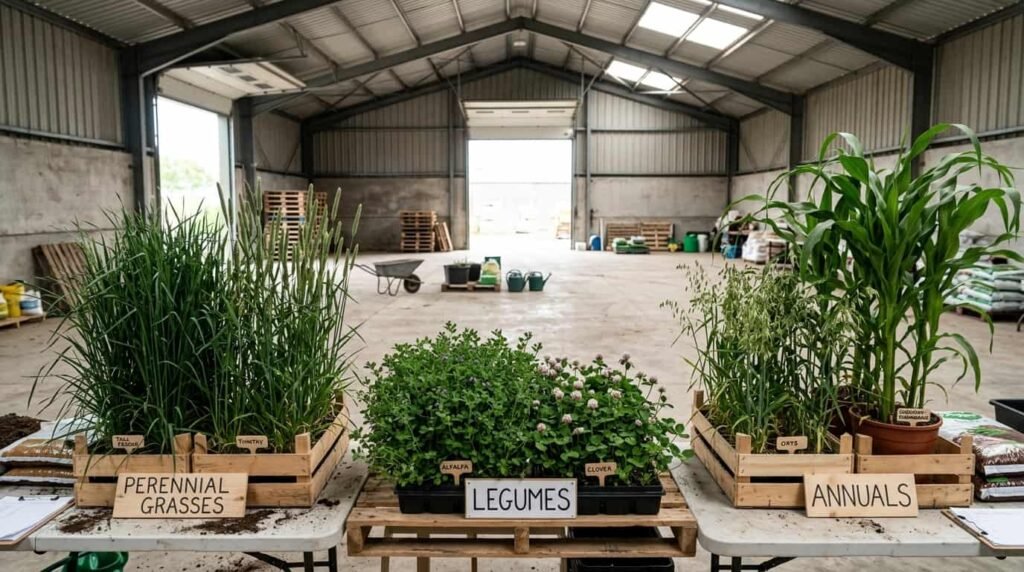
Forage seed is seed from grasses, legumes, and other plants grown specifically to feed grazing animals directly or as hay/haylage/silage. It includes perennial grasses (tall fescue, timothy, etc.), legumes (alfalfa, clover, etc.), and annuals (oats, sorghum-sudangrass, etc.).
The quality of forage seed is determined by its purity, germination, and suitability to your area, and it is this that will dictate how quickly a pasture will establish and how long it will last.
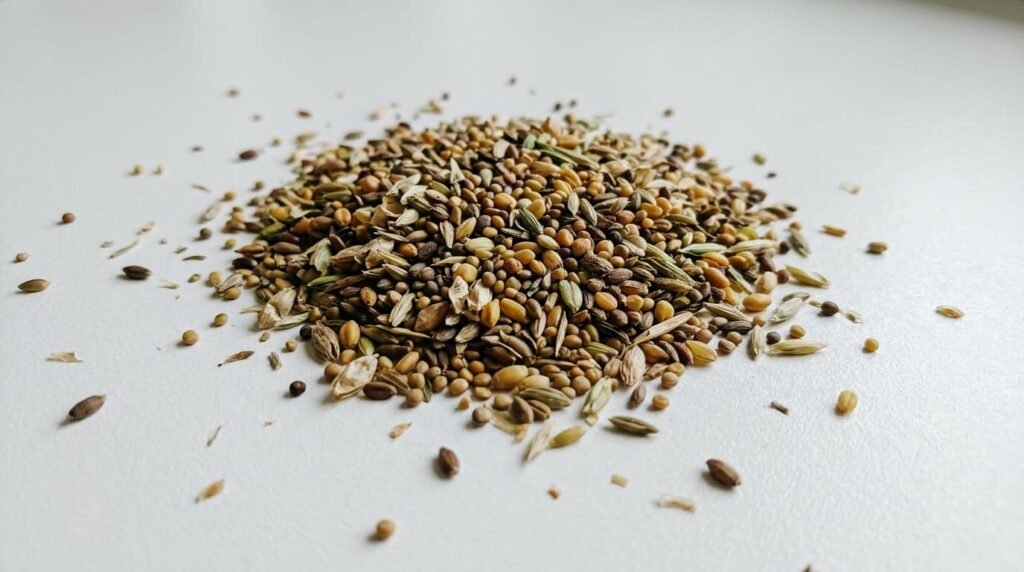
Choosing the right forage seed means matching species and cultivar to your soil, climate, and livestock, then planting at the correct seeding rate, depth, and date.
Pasture establishment is where most mistakes get made, and a mix of grass and legume seed can improve yield and forage quality when it is managed well. The tips below cover the details that matter most, so you can plant once and not have to reseed later.
Table of Contents
See What You’re Actually Buying
Not every pound of forage seed in the bag is a pound of plants. Seed tags list purity and germination, and the two combine into pure live seed (PLS).
Extension specialists at Mississippi State University point out that recommended seeding rates for native warm-season grasses are based on PLS rates. They also recommend always using certified seed so purity and germination are as good as they can be at planting.
Germination matters too. The University of New Hampshire notes that listed seeding rates are based on 100% germination. It takes a minute with a calculator, and it can save a thin stand.
Seeding Rate
Seeding rate is a balancing act. If the seeding rate is too low, the stand will be thin and weedy, and if it is too high, establishment costs become prohibitive.
More seed does not always mean more forage, either. A University of Wisconsin study on alfalfa found that yield and plant density rose with seeding rate only up to 15 kg of seed per hectare, and going to 25 kg did not increase yield.
The authors also note that the extra seed costs more than the extra yield is worth, so don’t try to make up for a poor seedbed by dumping on more seed.
Native grasses are no different in this respect. A trial by the University of Nebraska and USDA-ARS found that indiangrass seeding rate would have an effect on stand uniformity but not on dry matter forage yield (although again the usual recommendation is 20 to 40 PLS per sq ft).
Planting Depth
Depth is one of the easiest ways to waste forage seed. Most of the small-seeded forages need to be very shallow. Mississippi State says the smaller the seed diameter, the shallower it should be planted, and seed placed too deep may never emerge.
Extension forage specialist Dennis Hancock of the University of Georgia has the target at 1/4 to 1/2 inch and points out that planting too deep is a very common reason for establishment failure.
Why Seedings Fail
Even good forage seed can fail, and in most cases it’s down to a few causes. Missouri’s guide lists impermeable seed coats as one of them (this can be overcome by scarifying, drying after a light rain, freezing below -3 °C, and not covering the seed too heavily).
It also notes that seed in direct contact with banded fertiliser, herbicide carryover, or autotoxicity will damage the young seedlings.
Timing is also important here. If you seed too late in the fall or plant varieties that aren’t suited to your winter, you run the risk of winterkill.
If possible, plant early enough to allow the roots to establish prior to the first hard frost and select varieties that have been bred for your winter conditions.
Mix and Match Carefully
Planting a grass and legume mix can be a smart move, but how you load the drill matters. Grass and legume seed should not be mixed in the same hopper box, because legume seed will settle to the bottom of the drill and prevent even distribution. Use separate boxes or seed in two passes.
Legumes also need a little extra help. Legume seed should be inoculated with the plant-specific nitrogen-fixing rhizobia bacteria. Skipping inoculation is one of those shortcuts that costs you later in lower yield and weaker stands.
Annual Forage Seed
Annuals can be used to fill the gap when your perennial pasture is slowing down. The UVM Extension ran a trial on oat seeding rates from 75 to 200 lbs/acre as perennial pasture tends to decline in both yield and quality in the fall, and cool-season annuals such as oats can be of benefit.
If you’re grazing in the shoulder seasons, then a small block of oats or some other annual forage seed can go a long way in extending your feed supply.
Forage Seed Establishment
Start with a soil test, and lime applied 12 to 24 months ahead when needed, then tight grazing or mowing of existing vegetation and a non-selective herbicide before planting.
Good seed in a bad seedbed will still disappoint you, so treat establishment as a full plan. Test the soil, choose adapted species, check the tag, set your seeding rate and depth, and give the new stand time to root in before you put animals on it.

2 Comments