Things to Consider When Making a Permaculture Pond
A permaculture pond, if poorly done, becomes a muddy puddle that starts to leak by July and attracts mosquitoes by August. So before you take up a shovel, make sure you carefully consider where, why, and how you are going to dig.
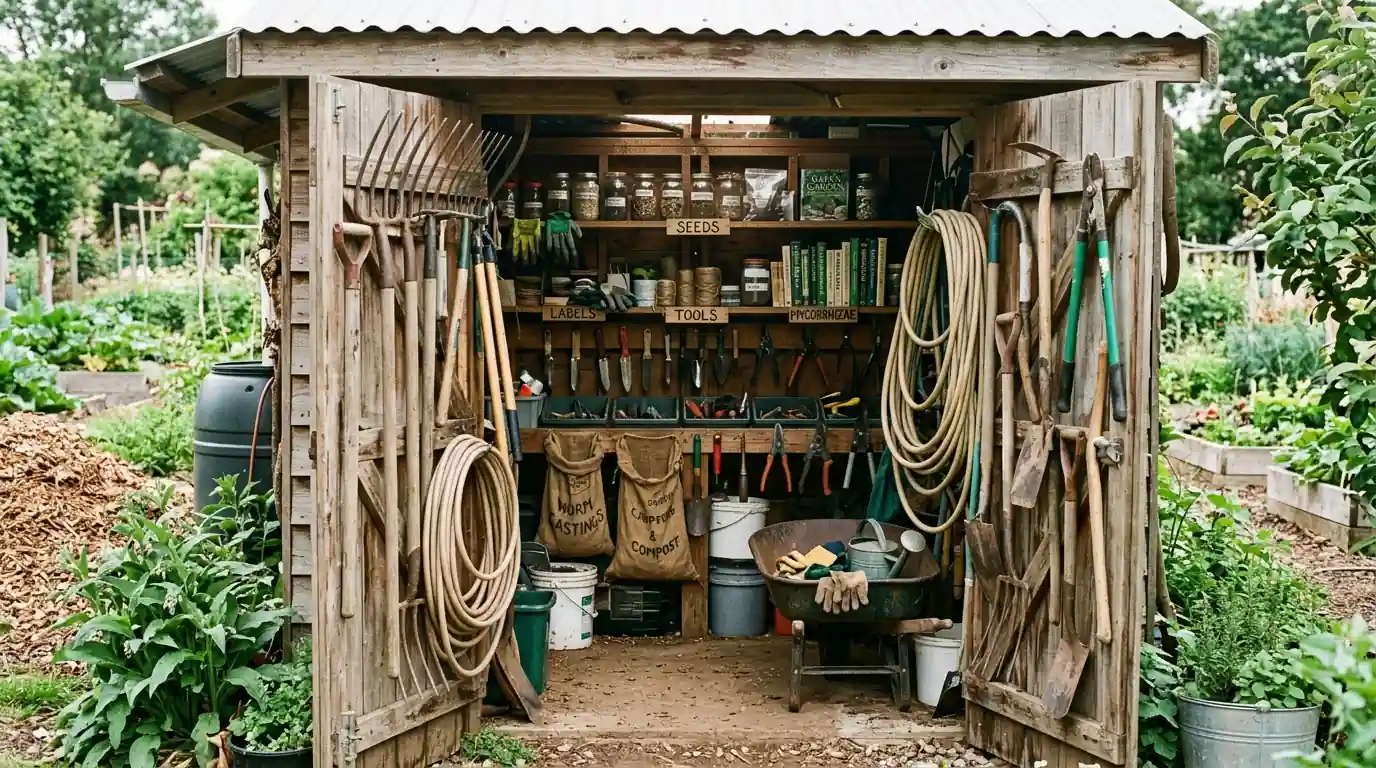
Also read: List Of All Useful Permaculture Tools
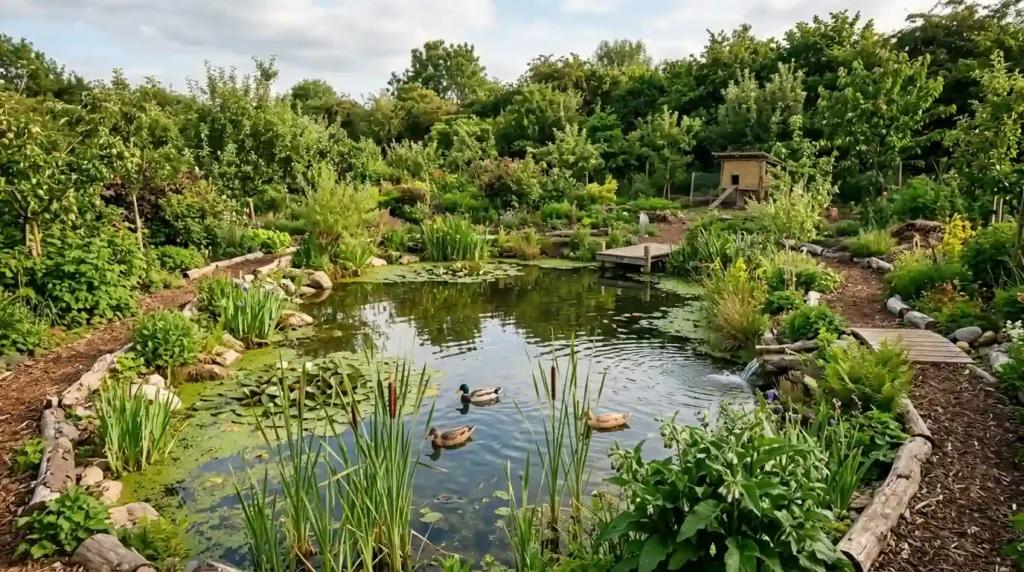
Table of Contents
The Permaculture Pond’s Purpose
Most people tend to aim for a combination of water storage, providing a habitat, allowing for irrigation, and having a pleasant place to sit.
A pond constructed primarily to supply a vegetable garden will be shaped and placed in a very different way from one that is mainly intended for frogs and dragonflies.
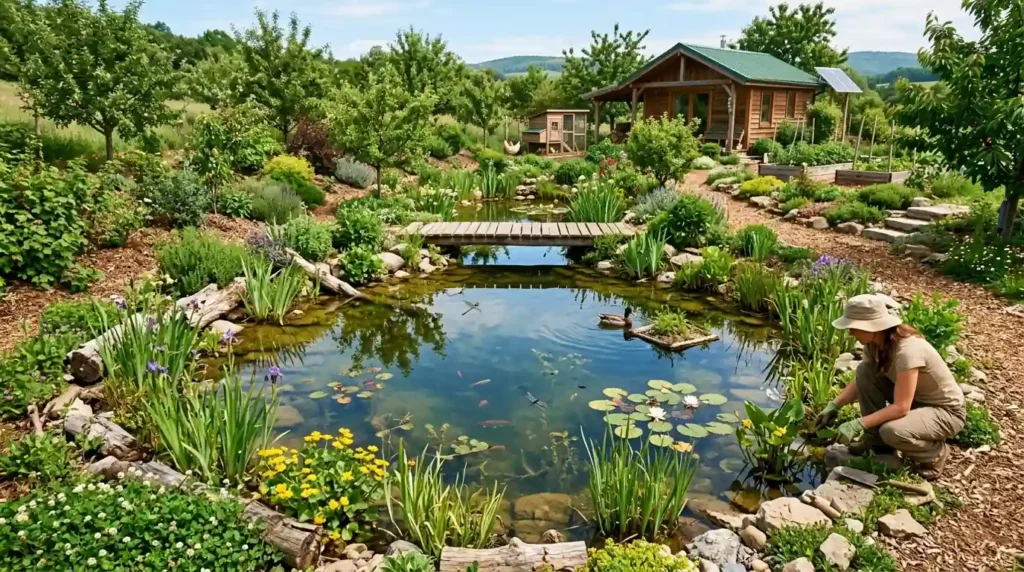
Although permaculture advocates that each element should carry out several functions, a pond that attempts to carry out all its tasks equally often ends up doing none of them well.
Also read: 25 Easy-to-Care-for Plants for Permaculture
Permaculture Pond Placement
The position of the pond is by far the most difficult thing to correct later on. Ideally, it should be situated in a low area or on a gently sloping part of the land since that is where water naturally tends to collect.
At the same time, the pond should be close enough to the parts of the garden you use most so that you can actually make use of the water, but far enough from large trees to prevent leaves from constantly falling into it.
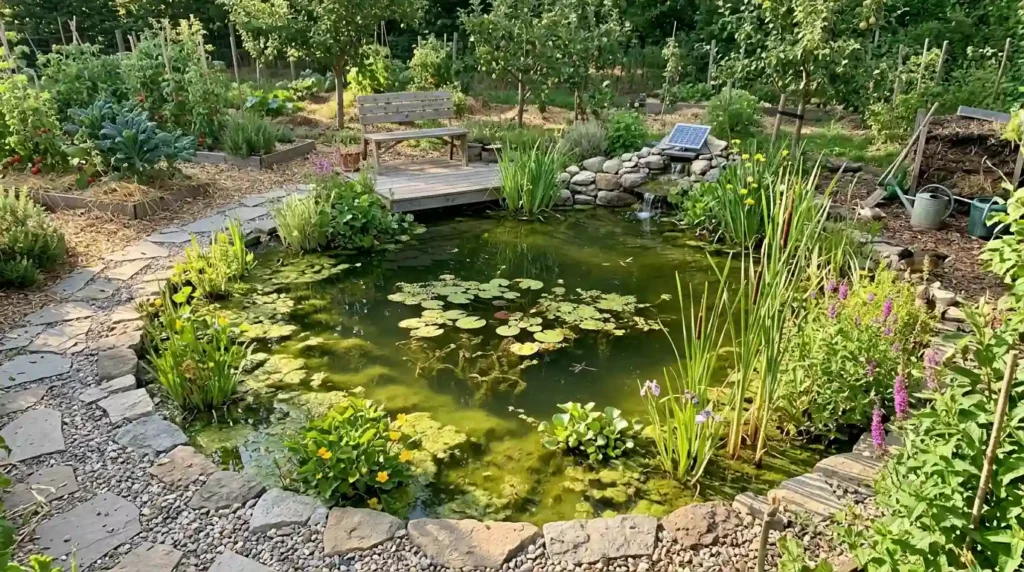
Sunlight is the other big factor. Research on 425 ponds found that ponds with less shading and no history of drying out held more species of plants and invertebrates. Shade also changes who moves in.
In one experiment on temporary ponds, more light shifted the community away from mosquitoes and towards algae-grazing tadpoles. Keep in mind that a little afternoon shade on the hottest side can still cut evaporation, so you don’t need to go fully open.
Keep the Water Clean
It’s tempting to take all the runoff and direct it into the pond, but you should consider what kind of substances that runoff is carrying.
Runoff from driveways, lawns that have been treated with fertilizer, or from adjacent fields can carry nutrients and pesticides, and that’s a quick way to end up with green soup.
A major study of farmland in England discovered that ponds which were not connected to streams or ditches provided significant biodiversity benefits, partly since they remained cleaner.
You could apply this principle by using water from roofs to feed your pond or by having the inflow pass through a planted swale or reed strip first, in that way allowing the plants to filter the water before it gets there.
Size, Depth and Shape
It’s generally true that a larger pond is better, but this isn’t always practical. A survey of urban ponds in a single English town showed that there was a strong connection between the size of the ponds and the diversity of the aquatic invertebrates.
Even so, small garden ponds contained a good amount of life. Therefore, if you only have space for a small pond, there’s no need to abandon the idea of having one. Make sure that:
- There is a shallow shelf with a gently sloping surface which is intended for marginal plants and for wildlife to climb on and off safely.
- A middle area about knee-deep for floating and underwater plants.
- A deep section, typically 1.5 metres or greater, should be present since in your climate the pond doesn’t freeze over completely or dry out in the heat, and the fish (if you have any) have a place to retreat to.
Seal the Basin
A pond that is incapable of holding water is no more than a costly dent, so it’s worth testing the soil first. In the case of heavy clay, it is often possible to compact the soil in layers to create a natural seal.
Sandy or gravelly ground will require a clay layer, bentonite, or a liner. Liners made from butyl rubber and EPDM last for a long time, but cheaper plastic sheets tend to crack and have to be replaced.
Whatever option you decide on, you should plan the overflow before filling the pond. For instance, a spillway that directs excess water into a swale, a wet garden bed, or a second pond will prevent the bank from being washed out after the first heavy storm.
Fish Care
Fish are a traditional element of permaculture and can be very useful for food, for getting rid of mosquitoes, and for cycling nutrients.
In practice, a pond with a large number of hungry fish can destroy tadpoles, dragonfly nymphs and water beetles.
If your main aim is wildlife, then you might as well leave the fish out altogether or keep one pond with fish in it and have a second pond without fish for amphibians and insects. Use them carefully.
Plant A Lot
The plants in a permaculture pond help to oxygenate the water, take in surplus nutrients, and provide insects and amphibians places to hide.
It is important to have a great variety of native plant species and to use the edges to grow useful ones such as watercress, water chestnut, taro, or cranberries, provided that these suit your climate.
You should steer clear of any species that are invasive. A number of commonly grown pond plants escape into nearby waterways and are extremely difficult to get rid of once they have become established.
Be Patient with a New Pond
At an early stage, a newly created pond may appear rather bare and disappointing. This is entirely normal.
A study of newly made ponds showed that young ponds had fewer species of plants and insects than established reference ponds, and amphibians were absent at first but were present again about five years later.
In another study of man-made ponds, it was found that biodiversity increased as the ponds got older, the oldest ones containing the most rare taxa.
The conclusion is that you should not feel the need to continually add to the pond, rearrange it, or ‘fix’ it during the first few seasons.
Murky water and a sudden outbreak of algae are usually just the pond as it adjusts to its new state.
It’s important to remember that ponds never remain the same over the long term. Long-term monitoring shows that a pond which has high diversity at the present time may not continue to have it, and that the greatest number of species is found when there is a mixture of younger and older ponds.
If you have the room, it makes sense to construct a second pond a few years from now in order to maintain a wide variety of conditions on your property.
Rules and Safety
Before you begin, check if your area requires any permits for ponds, water storage, or earthworks and contact your utility locating service to avoid accidentally striking a buried line.
You should also consider fencing, providing a shallow entrance, and ensuring clear lines of sight. This is a minor amount of effort when compared with the risks, particularly if children or neighbours are going to be nearby.
Start Small and Scale
If you’re in any doubt, start off with a simple design and then observe it for a full year before increasing its scale.
Pay attention to the way water flows over your land during heavy rain, note the position of the sun in each season, and observe which animals turn up spontaneously.
A permaculture pond requires patience, and the best ones are just as much the result of what you notice as they are of what you dig.
Also read: Permaculture Raised Beds: Tips for Beginners and How to Start Backyard Beekeeping: Easy Guide

One Comment