Rare Hoya Plants: Where to Find Them and What They’re Worth
Hoya plants are one of those hobbies that catch you by surprise. Before you begin spending a lot of money, it’s useful to understand what actually gives a hoya its rarity, where the better ones can be found, and what a reasonable price is.
Table of Contents
Reasons For Hoya Rarity
Rare Hoya plants have between 350 and 450 species, which makes it the largest genus in its subfamily and the second largest in the entire Apocynaceae family.
As a phylogenetic review in Blumea points out, our knowledge of how many species there are and of how they are related to one another is still very inadequate.
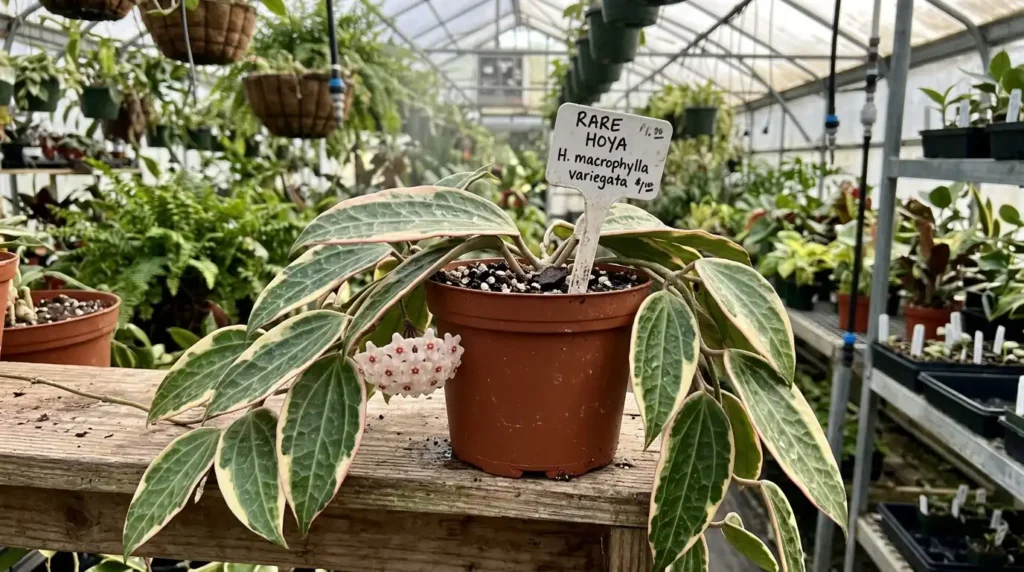
It therefore follows that a plant marketed as belonging to one species today could have a different name next year, so bear this in mind if you are paying a premium for a labelled plant.
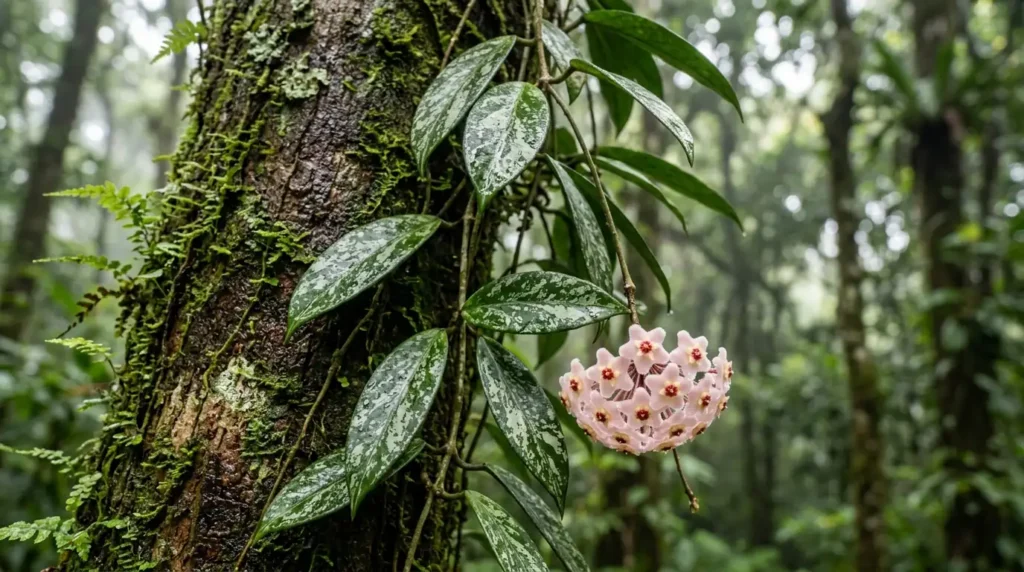
Rarity is generally due to a number of factors: certain species are rare because they are found only in small areas of forest, while others are rare since they are slow-growing and particular, and nurseries tend not to bother with them.
A recent paper in the journal Phytotaxa states that the Philippines is a centre of diversity for Hoya with 198 taxa recorded to date. A plant circulated among plant collectors under the name ‘Yellow Sapphire’ for nearly seven years before receiving a formal scientific name.
Where to Find Rare Hoya Plants
When it comes to buying hyacinths, the most reliable option is to choose specialist plant nurseries. Plant exchanges and local gardening clubs are excellent sources for obtaining cuttings.
On online marketplaces and collector communities, you are most likely to find really rare plants. But they also have the largest number of mislabelled plants, so each listing should be read carefully.
Cuttings are useful. Those with no roots are less expensive, weigh less when shipped, and allow you to check out a seller before making a large purchase. Just make sure that hoya cuttings have at least one node. Be patient for a few weeks since hoyas take a long time to root.
Above all, you should exercise caution when it comes to material that has been collected in the wild. Although the Philippines is a centre of biodiversity, a study of Hoya in Mindanao showed that a number of the species present there are endemic and at risk of becoming extinct.
Several of them are already listed as endangered or vulnerable in the national assessments. Seed production is very uncommon in most species, which is why conservation efforts have to rely on cuttings and micropropagation.
Putting this simply, you should buy plants that have been propagated in nurseries whenever possible. Moreover, you should check your local regulations regarding the import of plants before placing an order from abroad.
What Rare Hoya Plants Are Worth
Prices fluctuate greatly, and the term “rare” doesn’t always imply “expensive”. A variegated Hoya kerrii in a small pot was priced in the low double figures in US dollars (about $12 to $40) depending on the seller and the size of the pot.
On the hobbyist side, cuttings of uncommon species on a marketplace in Norway were priced between 100 and 950 NOK, which is equivalent to roughly $10 to $95.
A few things push the price up:
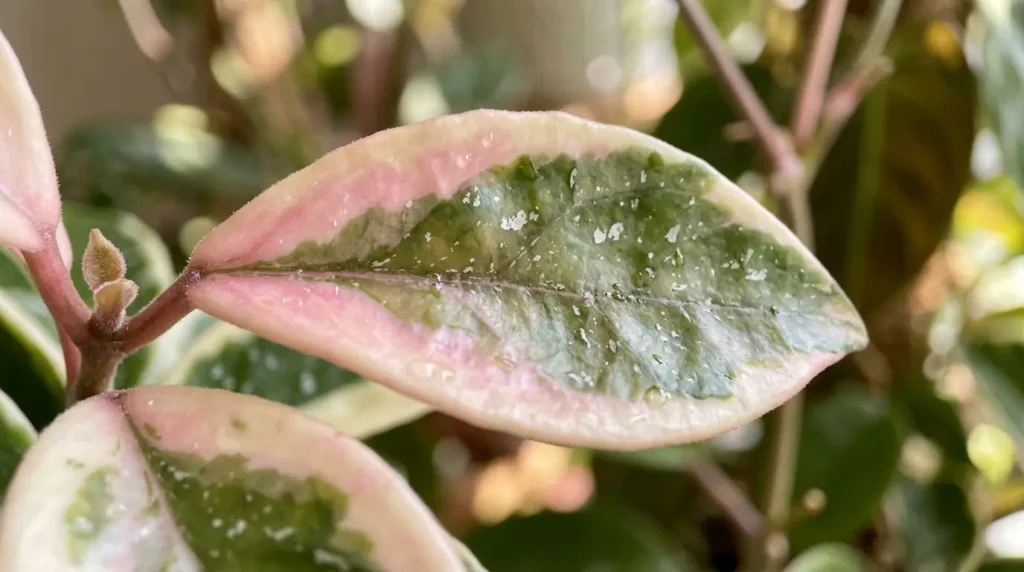
- Variegation. Inner variegation (center of the leaf is colored) usually costs more than outer variegation. Stable patterns cost more than ones that revert to green.
- Provenance. A plant with a documented locality code is worth more to serious collectors than an unidentified “sp.” with no history.
- Size and rooting. A rooted, established plant costs far more than a bare cutting, and you are paying for the months of growth.
- Hype. A species that blows up online can double in price in a season and then crash just as quickly.
Avoiding a Bad Deal
When you’re buying a plant, consider exactly what you’re getting. The relationships between most Hoya species have not yet been completely worked out. Since the experts are still working on sorting out the family tree, it’s safe to say that a good many of the plants available in the trade have the wrong name.
Therefore, request actual photos of the plant and find out if the seller has shown it in bloom as flowering is the best way to confirm the identification.
Suspect the seller if they are offering a dozen ‘ultra rare’ plants at low prices.
Keeping Your Rare Hoya Alive
There’s no worse thing than having a $90 Hoya die as a result of a watering error. Since most hoyas are epiphytes, they need a loose and well-draining potting mix as well as bright, indirect light.
Overwatering is the leading cause of death, so wait until the potting mix has dried out before watering again.
When you only have one or two chances to root a valuable cutting, it’s best to take your time and properly set it up with humidity and warmth rather than rushing the process.
To sum up, plants that are not particularly special should not be overlooked since a well-cared-for common Hoya will always outperform a neglected rare species.

2 Comments